































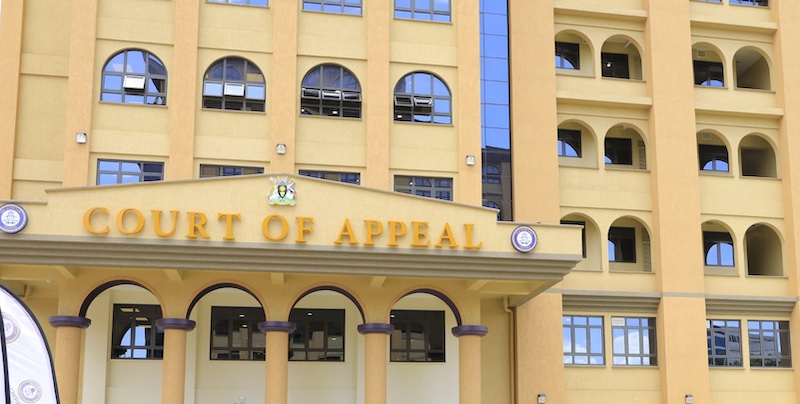
In a landmark decision highlighting evidentiary standards in sexual abuse cases, Uganda’s Court of Appeal has annulled a 27-year and 11-day sentence previously imposed on William Jjuko for aggravated defilement, ordering his immediate release after serving six years of his conviction.
The appellate court’s ruling centers on fundamental principles of criminal law regarding witness identification and the burden of proof in serious criminal matters.
The Case Background
The original charges stemmed from an alleged incident on July 2, 2017, in Nakawa Division, Kampala. Prosecution witnesses claimed that Jjuko had approached a young child with candy before luring her into nearby bushes where he allegedly committed a sexual assault.
A neighborhood witness, identified as 13-year-old Innocent Lutaaya, reported observing the incident and subsequently informed his mother and the victim’s family. Law enforcement became involved after the child was taken to a medical facility for examination.
Medical documentation using standardized assessment forms indicated evidence of mild inflammation and tenderness consistent with sexual contact. Clinical findings supported allegations that physical contact had occurred. Psychological evaluation confirmed that Jjuko possessed normal mental capacity and comprehension of criminal proceedings.
High Court Conviction and Appeal
Justice Jane Frances Abodo delivered the initial conviction on November 8, 2019, imposing the lengthy prison sentence based on available evidence. Dissatisfied with the judgment, Jjuko, represented by senior counsel Henry Kunya, escalated his case to the appellate court.
The appeal was heard under case number 0233 of 2023 before a three-justice panel comprising Geoffrey Kiryabwire, Ketrah Kitariisibwa Katunguka, and Cornelia Kakooza Sabiiti, with the state represented by chief state attorney Joseph Kyomuhendo.
Critical Identification Issues
The appellate court’s analysis focused extensively on the reliability of witness identification, a critical element in any criminal prosecution. The justices examined the circumstances under which the key witness observed the alleged perpetrator and the procedures used to establish identification.
The court found that the primary witness had only briefly glimpsed the suspected offender, possessed no prior acquaintance with him, and waited approximately two weeks before attempting formal identification. No organized identification parade was conducted, and no independent corroborating evidence connected Jjuko to the crime scene.
These procedural and evidentiary gaps became central to the appellate decision.
Legal Principles Affirmed
The appellate court emphasized that criminal prosecutions require that guilt be established beyond a reasonable doubt. When identification itself becomes questionable, the law mandates that courts resolve such doubts in favor of the accused person.
The justices concluded that reliance on a single witness who viewed the suspect briefly and only weeks later, without independent verification or identification procedures, created unacceptable risks of mistaken identity. This single-witness testimony, standing alone, could not meet the stringent evidentiary standards required in serious criminal cases.
Despite acknowledging medical evidence confirming that sexual contact had occurred, the court determined that the prosecution had fundamentally failed to establish that Jjuko was the responsible party beyond a reasonable doubt.
Court Decision and Release
The Court of Appeal therefore quashed the original conviction, set aside the sentence, and ordered Jjuko’s immediate release. The decision underscores the importance of rigorous identification procedures and corroborating evidence in sexual abuse prosecutions.
The case highlights ongoing challenges within Uganda’s criminal justice system regarding witness reliability, evidence collection standards, and the application of procedural safeguards designed to prevent wrongful convictions.