































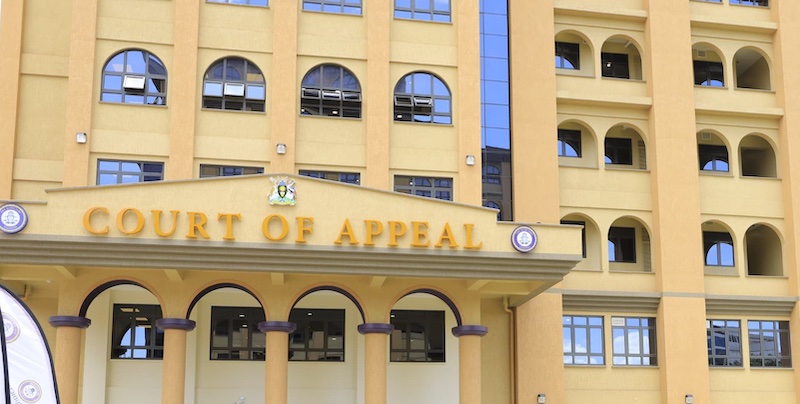
In a landmark decision on witness identification standards, the Court of Appeal has set aside a High Court conviction for aggravated defilement, freeing a man who had already served six years of his original 27-year sentence.
The case highlights critical vulnerabilities in criminal prosecution when relying solely on eyewitness testimony without adequate corroborating evidence or proper identification procedures.
The Original Conviction
William Jjuko was initially convicted by High Court Justice Jane Frances Abodo on November 8, 2019, for the aggravated defilement of a four-year-old girl in Nakawa Division, Kampala. The incident was alleged to have occurred on July 2, 2017, when according to prosecution claims, Jjuko lured the child with sweets into a nearby bush and sexually assaulted her.
The victim was discovered without underwear and showing signs of physical trauma. Medical examination using standard PF 3A forms documented mild tenderness and inflammation of the genital area, findings consistent with sexual contact. A 13-year-old neighbor, Innocent Lutaaya, reported witnessing the incident and informed his mother, who subsequently alerted the victim’s mother. The matter was formally reported to Jinja Road police station.
Based on this evidence, Jjuko was convicted and sentenced to 27 years and 11 days imprisonment.
The Appeal Challenge
Represented by senior counsel Henry Kunya, Jjuko pursued three grounds of appeal: questioning whether sexual contact definitively occurred, challenging the sufficiency of evidence linking him specifically to the offense, and contending that the sentence was excessive.
The Chief State Attorney Joseph Kyomuhendo represented government interests during the appellate proceedings.
Court’s Critical Findings
A three-judge panel comprised of Justices Geoffrey Kiryabwire, Ketrah Kitariisibwa Katunguka, and Cornelia Kakooza Sabiiti conducted a thorough review of the evidence and procedure.
The court accepted medical evidence confirming that sexual activity had occurred and acknowledged the victim’s mother’s testimony regarding the child’s condition when discovered. However, the judges found the identification evidence fundamentally unreliable.
The critical witness—the 13-year-old neighbor—had observed the alleged offender only briefly and possessed no prior familiarity with him. The witness identification occurred approximately two weeks after the alleged incident, creating substantial opportunity for memory degradation and confusion. Notably, no formal identification parade was conducted, and no independent physical evidence linked Jjuko to the crime scene.
Legal Principles Applied
The justices emphasized that criminal law imposes a strict evidentiary burden: the prosecution must prove guilt beyond reasonable doubt. When doubt exists regarding a defendant’s identity—the critical element distinguishing guilt from innocence—the law mandates resolving that doubt in the accused’s favor.
The court determined that relying exclusively on a single, inexperienced witness’s delayed identification, without corroboration or proper procedure, created an unacceptable risk of mistaken identity. This procedural failure fatally undermined the prosecution’s case.
Outcome and Release
The Court of Appeal allowed the appeal, quashed the original conviction, set aside the sentence, and ordered Jjuko’s immediate release. After serving six years in prison, he is now free.
The decision reinforces that while medical evidence of sexual activity may be conclusive regarding whether contact occurred, it cannot identify the perpetrator. Establishing perpetrator identity requires reliable evidence meeting higher procedural standards.
Implications for Criminal Justice
This case serves as a cautionary reminder about eyewitness identification’s inherent unreliability, particularly when witnesses are young, observations are brief, and identifications occur weeks after incidents. The appellate decision underscores the necessity of proper identification procedures and corroborating evidence in sexual assault prosecutions.