



























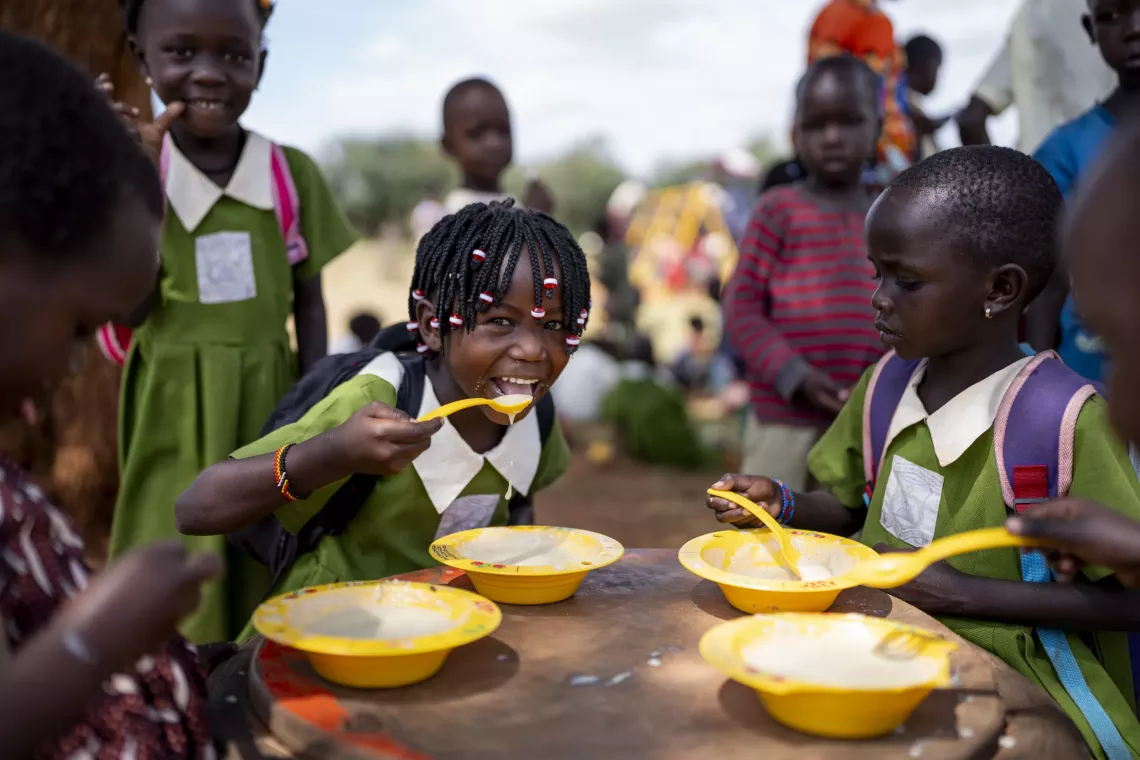
Millions of learners in government primary schools will wait longer for the planned school feeding programme.
The Ministry of Education and Sports says a national policy to guide the rollout is still under development.
The delay comes months after the Government announced plans to introduce meals in Universal Primary Education schools.
Education stakeholders had welcomed the plan, saying it could help reduce hunger and improve learning outcomes.
Government Announced Programme in 2024
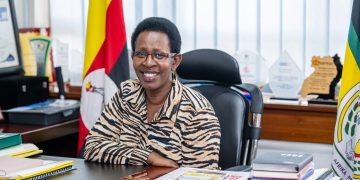
On December 5, 2024, Education and Sports Minister Janet Museveni said the Government had approved plans to provide meals in all UPE schools.
She made the announcement while presenting the National Resistance Movement Manifesto 2021-2026 progress report for the education sector.
The programme was expected to begin in 2026.
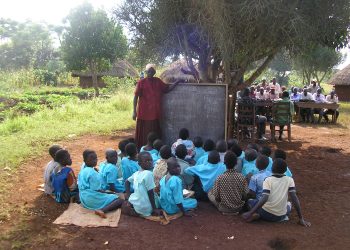
It is projected to benefit at least 9.1 million learners in 12,557 government primary schools.
The figures are based on the 2025 Baseline Education Census by the Uganda Bureau of Statistics.
The announcement marked a major shift in government policy.
For years, the Government maintained that parents and guardians carried full responsibility for feeding children at school.
Cabinet Policy Still Required
Education ministry Permanent Secretary Dr Kedrace Turyagyenda said the programme cannot start without a policy approved by Cabinet.
“You cannot start implementing something without a policy to guide it. When it came to implementation, it became necessary to first have the policy approved by Cabinet,” Dr Turyagyenda said in an interview.
She said the policy must clearly define how the school feeding programme will work.
“This is a government commitment that must clearly explain how the programme will be implemented, who will do what, and how responsibilities will be shared,” she added.
According to Dr Turyagyenda, consultations with stakeholders are ongoing.
She said the ministry has made substantial progress in drafting the policy.
However, she acknowledged that the programme is unlikely to start in the 2026/27 financial year because the budget has already been approved.
“Developing a policy requires extensive consultations and technical work. Once it is completed, it will be submitted to Cabinet for approval,” she said.
Many Learners Still Go Without Lunch
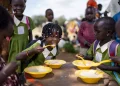
The delay means millions of learners in public primary schools will continue relying on parents and guardians for meals.
Many children still attend classes on empty stomachs.
Schools had welcomed the Government pledge, especially those struggling to provide meals after restrictions on parental contributions.
According to the Uganda Bureau of Statistics National Service Delivery Survey 2021, only 49 percent of government primary schools provide lunch to learners.
The same survey found that 16 percent of government primary schools reported that pupils go without lunch altogether.
The challenge is worse in rural schools.
In rural areas, 20 percent of government primary schools reported that learners did not receive lunch.
This compares with eight percent in urban areas.
Despite the delay, Dr Turyagyenda said parents remain legally responsible for feeding their children until the policy is approved and implemented.
“In the meantime, the law requires parents to feed their children, so every parent should make every effort to ensure that their children are eating,” she said.
Teachers Link Hunger to Poor Performance
Uganda National Teachers’ Union Secretary General Filbert Baguma said hunger continues to affect learning, attendance and academic performance.
“We continue talking about school dropouts and poor performance, yet these issues are directly linked to feeding. You cannot expect much from a child who has not eaten,” Baguma said.
Economist Kenneth Asiimwe of the Civil Society Budget Advocacy Group said the Government may be moving carefully because of the cost of feeding millions of learners.
“It is an expensive programme and not something government can rush into. Proper planning is necessary because poorly designed programmes often fail,” Asiimwe said.
However, he warned that repeated delays could weaken public confidence.
“When government makes commitments and implementation keeps being postponed, it creates a trust deficit between citizens and the state,” he said.