
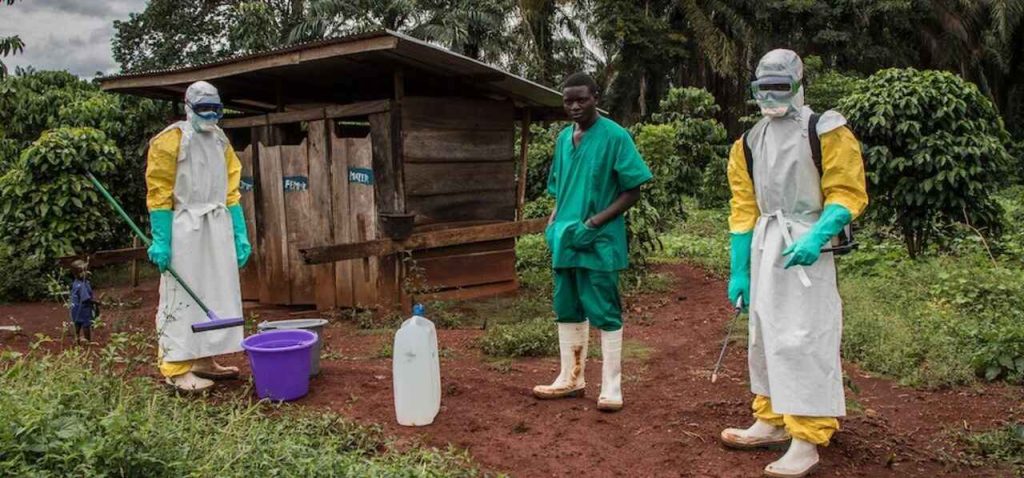
Uganda’s latest Ebola outbreak has begun to affect key parts of the economy, with tourism bookings falling, trade with the Democratic Republic of Congo slowing, and businesses warning of growing uncertainty.
Although health teams are working to contain the disease, economists and industry players say the impact could spread beyond hospitals. They warn that lost income, weaker trade, and declining investor confidence may increase if the outbreak continues.
Uganda depends heavily on sectors that remain sensitive to health alerts and regional instability. Tourism earnings rose to about $1.7 billion, or Shs6.1 trillion, in 2025. Exports to the DRC are estimated at between $800 million and $1 billion each year.
The DRC remains one of Uganda’s most important trading partners. That makes Uganda vulnerable when disease outbreaks disrupt movement across the border.
Tourism bookings decline
Tourism, one of Uganda’s leading foreign exchange earners, is already under pressure. Tour operators say international clients have cancelled or postponed trips after reports of Ebola cases in the country.
Some visitors who had booked for June and July have delayed or cancelled their travel plans. Overseas travel agents have also slowed inquiries as uncertainty grows.
Rodgers Akampurira, a tour operator and chief executive officer of Travel Specialist Limited and Turigye Tours, said the sector is facing fresh strain as travel confidence weakens.
He said safari vehicle bookings are usually made weeks or months in advance by tour operators, agents, and guides. However, he has recently received many cancellations. Some clients have already received refunds, while others are still waiting.
“June is usually a critical recovery period when many operators begin to regain financial stability,” he said.
Akampurira said several vehicles have remained parked for weeks. This has raised concerns about paying guides, drivers, support staff, and meeting tax obligations.
He added that negative travel advisories can damage Uganda’s tourism industry long after an outbreak ends. In some cases, he said, they can influence travel decisions for up to two years.
He also said tour operators have refunded tourists who had confirmed reservations. Many have chosen to visit Kenya, Tanzania, or Rwanda instead.
“The financial impact has been significant, and to a large extent I have suffered losses amounting to millions of shillings,” Akampurira said.
He added that some imported vehicles remain stranded, adding more pressure on operators.
Livelihoods linked to tourism affected
The slowdown is also affecting people beyond tour companies. Drivers, guides, hotels, accommodation providers, and other service providers depend heavily on tourism income.
Uganda usually receives around 130,000 to 135,000 international visitors per month during peak tourism seasons. These run from June to August and from December to February.
August is usually the busiest month, with more than 130,000 tourists. The two peak seasons account for about 65 percent of Uganda’s annual visitor numbers, which recently reached about 1.65 million.
State Minister for Tourism, Wildlife and Antiquities Susan Nakawuki Nsambu said information released during the peak season had caused fear. She argued that the public misinterpreted the situation, which she described as contained and involving only a few managed cases.
“Hoteliers are crying, tour operators are crying, and tour guides are crying,” she said.
Nakawuki said the effects also reach farmers who supply food to the tourism sector.
“When people grow their tomatoes or their pineapples, they are eaten by tourists,” she said.
DRC trade slows
The Ebola outbreak has also started to affect regional trade, especially with the DRC.
Faustin Asiimwe, export manager at MM Integrated Steel Mills (U) Ltd, said the company’s export business is under pressure. The DRC accounts for about 80 percent of its regional sales.
Asiimwe said the outbreak has disrupted customers who usually travel to Uganda to buy and collect goods. Cargo can still cross the border, but many buyers have paused transactions because they cannot or do not want to travel.
He said the company relies heavily on face-to-face transactions involving large sums of money. Some customers have tried to send payments through agents, but the costs remain high.
In some cases, a customer sending $130,000 can lose up to three percent in transaction fees. This has made many buyers reluctant to complete purchases remotely.
MM Integrated Steel Mills, which makes Kiboko Mabati, exports roofing sheets, section tubes, plastic tanks, barrels, and other steel products. It also serves South Sudan, Rwanda, Burundi, and Kenya, but the DRC remains its main market.
The company exports about 600 tonnes of products every month. Around 480 tonnes, or 80 percent, go to the Congolese market.
Asiimwe said any long disruption in the DRC market would directly affect the company.
Economists warn on foreign exchange
Senior economist Fred Muhumuza said about 80 trucks were reportedly stranded at the border because they could not cross into the DRC.
He warned that prolonged disruption could weaken Uganda’s role as a regional trade hub. It could also reduce export earnings as the country seeks stronger external revenue.
“While we cannot quantify the losses, since neither the Uganda Tourism Board nor the Uganda Revenue Authority has released figures on what could be lost from the Ebola outbreak, there is definitely going to be an impact on foreign exchange earnings.
There are already tourism cancellations, and household incomes will also be affected, especially for those incurring medical costs.
“However, it is still difficult to give a clear estimate as the situation is evolving,” he said.
Cross-border trade supports thousands of livelihoods. Small-scale traders, transporters, and wholesalers depend on daily movement between Uganda and the DRC.
However, stronger health checks, screening, and movement controls could slow cargo flows. They could also raise transport costs and affect supply chains on both sides.
Public spending pressure rises
The outbreak is also expected to increase pressure on public finances. Government agencies are scaling up surveillance, contact tracing, treatment centres, laboratory testing, protective equipment, and public awareness campaigns.
The World Health Organisation has estimated that more than $115 million is needed over the next three months. The money would support Ebola response operations in Uganda and the wider region.
Such spending remains vital for saving lives and containing the outbreak. However, it can also divert resources from infrastructure, education, and broader health system strengthening.
Investor confidence under pressure
Ebola outbreaks can also affect investor sentiment. Uganda has previously shown strong capacity to contain the disease, but global media coverage can create temporary uncertainty.
This may affect investment decisions in hospitality, aviation, and services. Business activity may also slow when consumers reduce travel, limit spending, or avoid public gatherings.
Transporters, market vendors, and informal workers who depend on daily movement often feel the effects first.
Past Ebola outbreaks in Uganda and the wider region show that economic disruption can remain short-term when containment is swift. However, delays or wider transmission can raise costs across several sectors.
Tourism often takes longer to recover because of reputational damage. Trade flows usually stabilise faster once confidence returns at the border.
For now, Uganda’s economic stability depends on both containing the virus and restoring confidence among travellers, traders, and investors.