

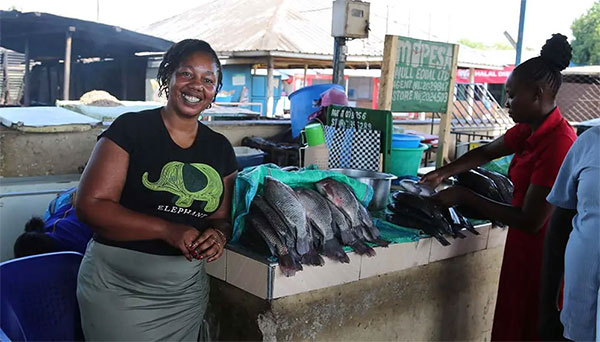
Fish farmers at Dunga Beach in Kisumu are using artificial intelligence to prevent mass fish deaths after years of sudden losses in Lake Victoria.
The AI-powered underwater monitoring system sends SMS alerts when water conditions become dangerous for fish. In early February 2026, the system warned more than 300 fish farmers that dissolved oxygen levels had dropped sharply beneath the lake’s surface.
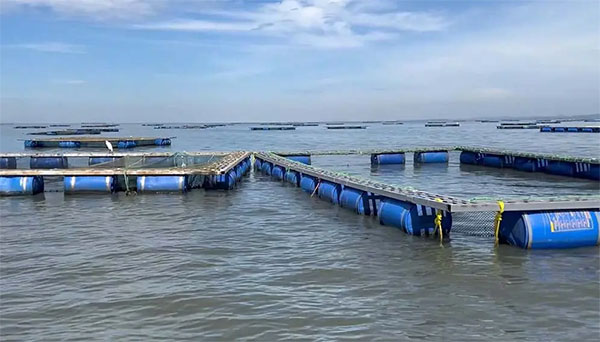
The alert allowed farmers to move their tilapia cages to safer waters before the fish suffocated.
Local leaders at the Dunga Beach Management Unit helped coordinate the response. Farmers say more than 450 tilapia cages were shifted after the warning.
This time, the mass fish deaths that farmers had come to fear did not happen.
AI Alerts Warn Farmers Before Fish Die
For years, cage farmers at Dunga Beach faced heavy losses with little warning. They could end one day with healthy fish and return the next morning to find cages filled with dead tilapia.
Didi Victor, a fish farmer at Dunga Beach, told SciDev.Net that the system had changed how farmers respond to danger.
“This is a miracle. This is one of its kind on Lake Victoria,” he said.
“We used to have fish kills, and we never knew what was happening.”
Victor showed alerts on his phone indicating that dissolved oxygen had fallen below 2.0 milligrams per litre, a level farmers now treat as dangerous.
The system was developed through a partnership between the Kenya Marine and Fisheries Research Institute and Nairobi-based ShoShin Innovation Hub.
Underwater sensors collect water-quality data and send it to cloud servers. Artificial intelligence then analyses the information and sends simple alerts to farmers.
The messages advise farmers to take action, including slowing feeding or moving cages.

Fish Losses Had Reached Nearly US$1 Million
The stakes are high for fish farmers around Dunga Beach.
According to ShoShin Innovation Hub CEO Naftal Obwoni, fish deaths between 2024 and 2025 wiped out nearly US$1 million worth of stock in the area.
Cage aquaculture has attracted many farmers because of its commercial potential. However, repeated fish kills have shaken confidence in the sector.
A 2022 study by KMFRI researchers found that more than three quarters of fish farmers in Kenya had reported mortalities in their farms. Most suffered losses of up to 10 per cent.
Farmers also lose money spent on feed, fingerlings, labour and loans when fish die suddenly.
Scientists Link Fish Kills to Oxygen Depletion
KMFRI scientists say many fish deaths on Lake Victoria are linked to depleted oxygen.
Chrispine Nyamweya, a senior research scientist and assistant director at KMFRI, said excess nutrients entering the lake can fuel plankton blooms.
During the day, plankton produce oxygen through photosynthesis. At night, however, they consume oxygen. When plankton levels are high, oxygen can fall quickly.
The risk is greater in cage farming areas, where many fish are kept in a small space.
“When we have an excess of these plants, at night they consume a lot of oxygen, depleting oxygen from the water column and hence suffocating fish,” Nyamweya said.
He added that organic matter washed into the lake after heavy rains can worsen the problem. Uneaten fish feed and decaying material on the lakebed also consume oxygen as they break down.
Pollution Pressures Add to the Risk
Dunga Beach leaders say pollution from rivers flowing into Lake Victoria also contributes to poor water quality.
Maurice Ouko, vice chairman of the Dunga Beach Management Unit, said the area is affected by River Nyando and River Kibos.
“Immediately the rivers discharge the waste to the lake, the early warning is telling us that the oxygen is low,” Ouko said.
He said local leaders then advise farmers to move cages into deeper waters.
Ouko also acknowledged that fishers contribute to pollution. However, he blamed factories around Kisumu for releasing pollutants into rivers that feed Lake Victoria.
“The main perpetrators are factories—the big factories which are in Kisumu,” he said.
KMFRI says it monitors what flows into the lake and shares findings with government agencies responsible for enforcement.
Nyamweya said KMFRI’s role is to provide scientific information, while regulation of effluent falls under the National Environment Management Authority.
In 2025, the Lake Victoria Basin Commission completed a lake-wide survey under the East African Community for Nature project.
The survey measured water-quality indicators including pH, temperature, dissolved oxygen, calcium, magnesium, chloride and chemical oxygen demand. Selected sites were also tested for heavy metals including arsenic, mercury and lead.
The commission also monitored phytoplankton to study algal composition and potential risks of harmful algal blooms.
At the inaugural Lake Victoria Day celebrations in May 2026, LVBC executive secretary Masinde Bwire warned that pollution and environmental degradation were threatening the lake.
“Unless urgent action is taken, these challenges could negatively affect biodiversity, fish production, water quality, and the livelihoods of surrounding communities,” he said.
Kisumu Waste Concerns Remain
Kisumu County has made several efforts to address waste flowing into Lake Victoria.
In 2023, Governor Peter Anyang’ Nyong’o joined a clean-up exercise with Osiepe Sango, also known as Friends of Lake Victoria Organisation.
A draft Kisumu Sustainable Waste Management Policy published in 2025 proposes a ban on uncontrolled dumping and burning. It also calls for consistent enforcement and community reporting through mobile platforms.
The draft policy states that Kisumu generates between 400 and 500 tonnes of solid waste daily.
It says 60 to 70 per cent of that waste remains uncollected or is improperly disposed of in open spaces, drainage channels and areas near water bodies.
System Could Expand to Other Hotspots
Since the first warning alert in February 2026, there have been no reports of mass fish deaths at Dunga Beach.
The success has increased interest in expanding the system to other high-risk areas.
KMFRI says 15 hotspots have been identified for possible rollout. Two additional locations are expected to go live in the second half of 2026.
The expansion could come at a critical time for Kenya’s aquaculture industry.
A January 2026 report by Project INCATA and partners found that Kenya’s cage-based aquaculture production grew from 24 metric tonnes in 2014 to 30,565 metric tonnes in 2024.
Over the same period, cage operators increased from 39 to 2,737.
As more farmers invest in cage fish farming, mass fish deaths pose a growing threat to livelihoods and investor confidence.
KMFRI has also developed a Lake Victoria spatial plan to guide farmers on suitable areas for cage aquaculture.
Nyamweya said fish deaths usually occur in areas classified as unsuitable for aquaculture.
“What we have seen is that the fish that die, die in places that we characterise as unsuitable for aquaculture,” he said. “Anyone who is in the green zone has not suffered these fish kills.”
Local Technology Drives the System
ShoShin says much of the AI system was built locally, including software, cloud infrastructure and sensor circuit boards.
Obwoni said local development helps reduce the cost of deploying Internet of Things technology in African settings.
“Today, if somebody purchases a sensor in Africa or in Kenya, they can easily plug into our software, and start using that hardware,” he said.
The system is designed for farmers who may have limited connectivity or use feature phones. Farmers receive simple SMS messages, while scientists and managers use more technical dashboards.
Obwoni said better monitoring could also help reduce disputes over the causes of pollution and fish deaths.
He said consistent data could support enforcement, policy decisions and insurance products for farmers.
Data May Help Farmers Access Insurance
Some fish farmers say insurance remains too expensive.
Paul Ochieng, a fish farmer, lost fish worth 1 million Kenyan shillings, about US$7,730, after fish suffocated in eight cages near a river inlet in 2025.
“The insurance companies always come, but they are too expensive. They insist on insuring per cage,” he said.
Obwoni said insurers and financial institutions are beginning to show interest in the data produced by the monitoring system.
He said the data trail could help them understand losses and price risk more accurately.
“The ripple effect on this is bigger,” Obwoni said. “It’s beyond just the death of fish.”
AI Tools Also Tested on Kenya’s Coast
Similar digital tools are also being tested along Kenya’s coastline.
WorldFish scientists in Mombasa are implementing an Integrated Multi-Trophic Aquaculture system that raises marine tilapia, sea cucumbers and gastropods together.
The system allows waste and excess feed from one species to support another, lowering costs and diversifying farmer income.
Scientists are using AI tools to monitor pH, temperature and salinity, which are critical for species with different environmental needs.
Esther Wairimu, who leads a team implementing WorldFish’s Asia-Africa BlueTech Superhighway project, said WorldFish is working with ShoShin Innovation Hub to pilot the E-Samaki platform in Kilifi and Kwale counties.
The platform supports farm management, water-quality monitoring, advisory messages and farmer alerts.
“What ShoShin and KMFRI are demonstrating at Dunga Beach is the value of continuous sensing, rapid analysis, and timely alerts in a high-risk aquaculture environment,” Wairimu said.
“What we are building through E-Samaki on the coast is a complementary part of that picture.”
She said the coastal system combines farm records, water-quality monitoring, advisory logic, farmer-facing alerts and scientific validation.
Climate Change Raises New Risks
Wairimu said climate change is increasing pressure on aquaculture systems.
“Currently, we are experiencing climate change, and it is coming with many effects,” she said.
In one pond-based pilot site, scientists recorded water temperatures of about 47 to 48 degrees Celsius earlier this year.
Wairimu said those levels are extreme for organisms used to temperatures closer to 25 to 30 degrees Celsius.
“Those organisms are already very, very much stressed,” she said.
She added that different species respond differently to changes in water quality. Nutrient-rich water may help seaweed grow but stress fish.
Freshwater intrusion after heavy rains can also lower salinity and affect marine species such as rabbit fish.
By flagging dangerous readings early, the system helps farmers and researchers act before losses grow.
Farmers to Receive Alerts at No Cost for Now
Aquaculture innovator Dave Okech, founder of Kisumu-based Aquarech Ltd, welcomed the AI early warning system but said its success depends on accuracy and affordability.
“This AI early warning system is a welcome development, so long as the AI models give timely, accurate and farmer-friendly alerts,” he said.
Nyamweya said fish farmers across Kenya will access the early warning alerts at no cost for now.
He said the government is covering the cost of managing data and sharing critical information until a subscription model is introduced.
“It will be a tiny fee,” he said.
He added that government will also cover the cost of expanding the system to other hotspots on Kenya’s side of Lake Victoria.
The development aligns with Kenya’s National Digital Masterplan 2022–2032, which prioritises AI-driven delivery of government services.
While artificial intelligence cannot stop pollution or change weather conditions, researchers and farmers say early warning systems can reduce losses.
At Dunga Beach, AI has already helped farmers understand what was killing their fish and given them time to respond before disaster strikes.