
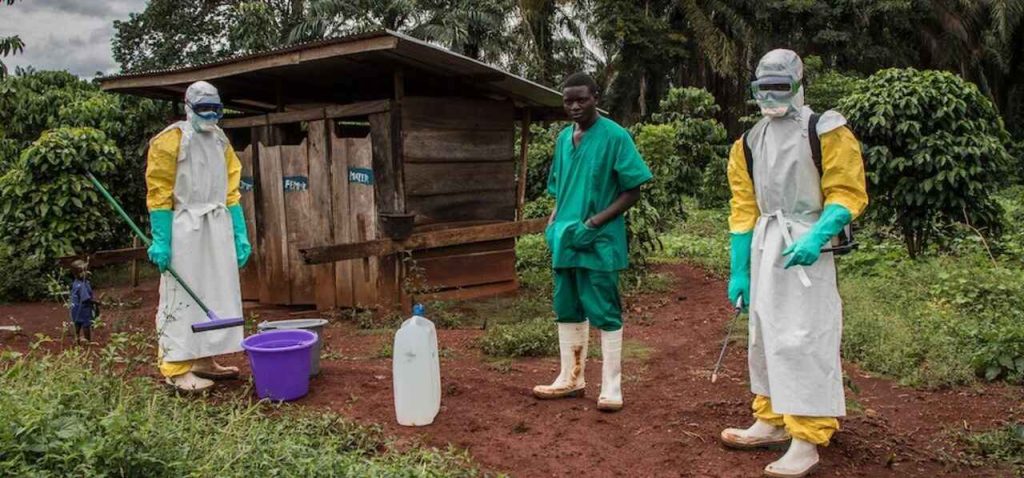
Uganda’s push for an Ebola-free declaration has been delayed after health authorities confirmed a new imported Ebola case on June 21, resetting the country’s 42-day countdown.
The latest case raises Uganda’s cumulative Ebola infections to 20. It was confirmed after the country had gone 16 days without reporting a new case.
Under World Health Organisation guidelines for hemorrhagic fever outbreaks, a country can only be declared Ebola-free after completing 42 consecutive days without any new infections. The period represents two full 21-day incubation cycles.
Once a new confirmed case is recorded, the countdown returns to day zero, regardless of how many days had already passed.
Border Crossings Remain a Major Concern
Health experts say the imported case shows that Uganda still faces a high risk of cross-border Ebola transmission.
Prof Pontiano Kaleebu, the executive director of the Uganda Virus Research Institute, said Uganda’s long and porous border with the Democratic Republic of Congo remains difficult to monitor.
“Uganda and the Democratic Republic of Congo share a long and porous border with numerous unofficial crossing routes often not effectively monitored. This makes it difficult to fully control movement, yet these are the very points through which infections can easily be introduced,” Prof Kaleebu said.
He said repeated Ebola outbreaks in the region show the need for stronger border health security. He also called for better surveillance systems and improved information sharing to reduce future imported infections.
Health Facilities Urged to Stay Alert
Prof Kaleebu warned that health facilities must continue enforcing strict infection prevention and control measures.
He said health workers often face early exposure because suspected Ebola patients usually seek care first from medical facilities.
“Strict infection prevention and control measures, including screening, isolation procedures, availability of protective equipment, and continuous training of health workers, must be maintained even when case numbers decline,” he added.
The new case has also renewed attention on surveillance and contact tracing.
Dr Dan Kyabayinze, the director of Public Health, said authorities activated response teams immediately after the outbreak was declared.
“The most critical pillar of the response has been contact tracing and monitoring. On the very day the outbreak was declared, we activated surveillance teams to track all sick people and their contacts,” he said.
Dr Kyabayinze said health teams continue to follow up contacts daily. The aim is to identify, isolate and test anyone who develops symptoms before they infect others.
He said the response has supported improved outcomes. Seven people have already recovered after receiving treatment and testing negative twice, 72 hours apart.
Surveillance Strengthened at Entry Points
Dr Kyabayinze said the government introduced movement and gathering restrictions to reduce transmission risks.
He also said Uganda’s western border remains the country’s biggest vulnerability because of frequent population movement and many unofficial crossing points.
To improve early detection, the government established additional laboratory testing capacity in Arua and border areas. Authorities also intensified screening at points of entry.
Health teams have strengthened infection prevention measures in health facilities, schools and high-risk communities.
“We have been very intentional in extensive public awareness and risk communication campaigns, using the media, community leaders, and local structures to disseminate accurate information, combat misinformation, and encourage early reporting of suspected cases,” Dr Kyabayinze said.
The new imported case means Uganda must now begin a fresh 42-day period without any further Ebola infections before it can be declared Ebola-free.