
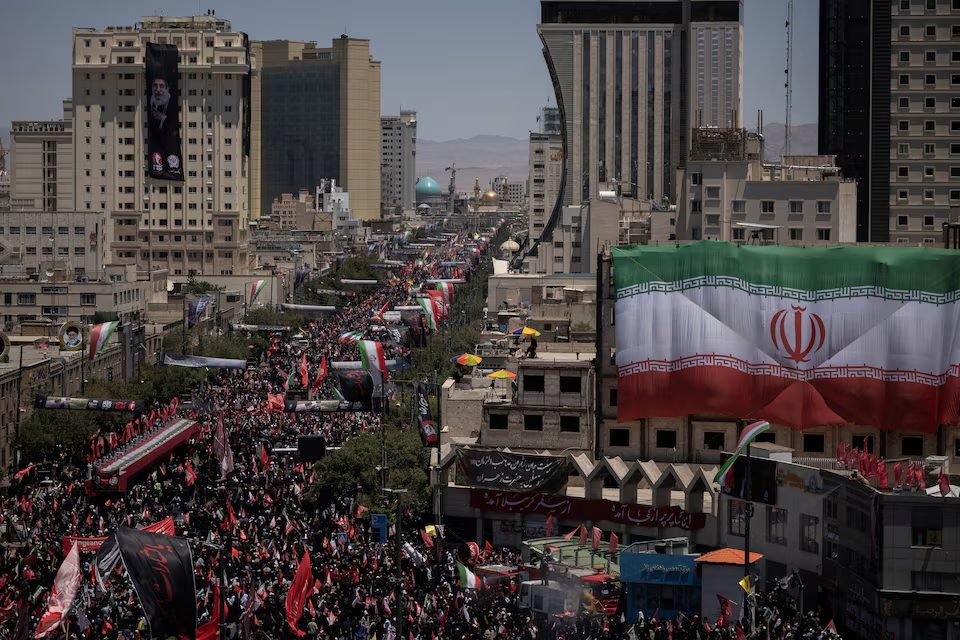
Iran buried late Supreme Leader Ayatollah Ali Khamenei on Thursday at the Imam Reza shrine in Mashhad, ending days of funeral processions that drew large crowds across Iran and Iraq.
The burial in northeast Iran came at a tense moment for the Islamic Republic. Public mourning has unfolded alongside renewed confrontation with the United States after weeks of uneasy calm.
Crowds filled parts of Mashhad on Thursday morning as mourners waved Iranian flags, carried photographs of Khamenei and displayed revolutionary slogans. The golden dome and minarets of the Imam Reza shrine formed the backdrop to the final ceremony.
Khamenei’s funeral processions had earlier passed through Tehran, Qom and the Iraqi shrine cities of Najaf and Karbala. Thousands of mourners attended events in Iraq on Wednesday, according to reports from Najaf.
Mojtaba Khamenei Remains Out of Public View
The burial also renewed questions about Mojtaba Khamenei, who was named as his father’s successor after Ali Khamenei’s death.
Mojtaba has not appeared publicly since the strike that killed his father. Reports say he has issued written statements, but no official image, video or voice recording has been released.
Senior sources in Tehran cited in the draft said Mojtaba was injured in the same strike and remains under heavy security precautions. They said authorities were limiting his public exposure because of security concerns.
Several reports have also noted that Mojtaba’s absence from major funeral events has raised public questions about his condition and leadership style.
Mourners Demand Revenge
At the Mashhad ceremony, some mourners chanted slogans calling for revenge against US President Donald Trump. Placards with threats against Trump were also seen at earlier funeral events.
The slogans reflected the anger among hardline supporters who blame foreign enemies for Khamenei’s death.
Iranian authorities have used the funeral period to project unity and strength after months of war and political pressure. The ceremonies have also carried strong religious symbolism, with Khamenei’s death being framed by supporters in the language of martyrdom.
Martyrdom holds deep significance in Shi’ite tradition, and the funeral processions through Najaf and Karbala underscored the religious weight Iran sought to attach to the moment.
A Divisive Legacy
Khamenei led Iran from 1989 after the death of Ayatollah Ruhollah Khomeini. Over nearly four decades, he consolidated power around the office of the Supreme Leader.
His rule strengthened the influence of the Islamic Revolutionary Guard Corps and reduced the political space available to elected institutions, including the presidency and parliament.
Supporters viewed him as a defender of the Islamic Republic against Western pressure. Critics accused his government of repression, economic mismanagement and crushing dissent.
The funeral comes after months of internal unrest and economic pressure. Reports say Iranian security forces violently suppressed nationwide protests earlier in 2026, while sanctions and war damage worsened hardship for many citizens.
Iran Faces Uncertain Transition
Analysts say Mojtaba Khamenei inherits a state shaped by his father’s long rule but facing deep internal and external challenges.
The Revolutionary Guard is widely seen as a powerful force behind Iran’s strategic direction. Mojtaba’s rise has therefore placed renewed attention on how much influence the Guards will exercise during the transition.
For now, Iran’s leadership is trying to turn Khamenei’s death into a moment of national and religious mobilisation.
However, the absence of the new Supreme Leader from public view has left Iranians and foreign observers watching closely for signs of how the country will be governed after one of the longest leadership eras in the Islamic Republic’s history.