
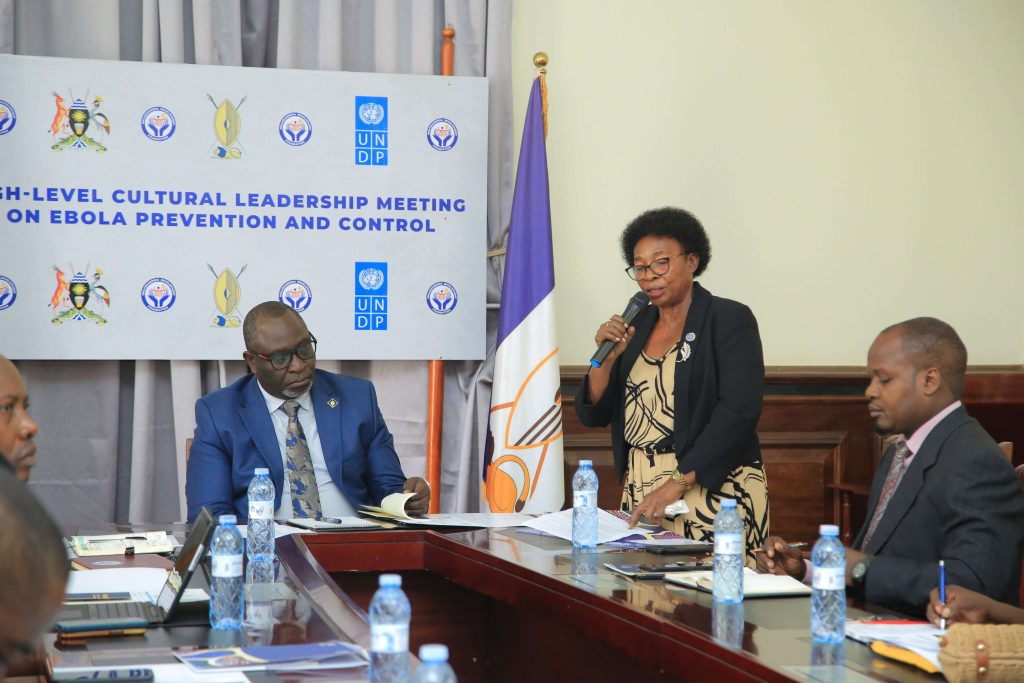
The Buganda Kingdom has established an Epidemic Response Committee to strengthen community preparedness against Ebola and other infectious disease outbreaks.
The committee will support government efforts to prevent the spread of diseases through awareness, prevention and community mobilisation.
Second Deputy Katikkiro Robert Waggwa Nsibirwa unveiled the committee during a meeting with Ministry of Health officials at Bulange, Mengo.
The committee will be chaired by the Kingdom’s Information Minister, Israel Kitooke.
Buganda Cites Past Public Health Campaigns
Nsibirwa said Buganda has a long record of working with government during public health emergencies.
He cited the Kingdom’s role in campaigns against HIV/AIDS and Covid-19.
“Buganda has always been at the forefront of addressing public health challenges. During the HIV/AIDS campaign, infection rates reduced significantly through sustained community mobilisation, and during Covid-19 we worked closely with the government to contain the pandemic,” Mr. Nsibirwa said.
He said the Kingdom has also developed a disaster management handbook with stakeholders. The handbook is meant to guide communities on responding to emergencies without causing panic.
“As a cultural institution that receives many visitors from different countries, we must plan ahead and be prepared for any public health emergency. This committee will coordinate awareness, prevention and response efforts across the Kingdom,” he said.
Nsibirwa commended the Ministry of Health for its handling of the Ebola outbreak.
He said the strict use of standard operating procedures had helped contain the outbreak. He also noted that no Ebola deaths had been registered within Buganda.
“We are confident that the Ministry of Health has managed the situation well and that together we can contain the outbreak,” he said.
Nsibirwa also said monkey meat is not consumed in Buganda because monkeys are regarded as a clan totem. He said the practice is culturally unacceptable.
Health Ministry Says Contacts Were Quarantined
Richard Kabanda, the Commissioner for Health Promotion and Education at the Ministry of Health, said Uganda had contained the outbreak through contact tracing and quarantine measures.
“We have quarantined more than 820 contacts for 21 days in designated facilities. This has greatly reduced the risk of community transmission because anyone who had close contact with a confirmed case is isolated and monitored,” Mr. Kabanda said.
Kabanda said Uganda’s disease surveillance system has strengthened the country’s ability to respond quickly to outbreaks.
He also cited experienced health workers and improved laboratory capacity.
“Our laboratories return Ebola test results within eight to ten hours, compared to about 10 days in eastern Democratic Republic of Congo. That capacity has made Uganda one of the leading countries in outbreak response on the continent,” he said.
Kingdom Structures Asked to Support Awareness
Kabanda urged Buganda to use its community structures to spread health messages.
He said clan leaders, county chiefs and Kingdom media platforms such as CBS FM and BBS Television can support public awareness, infection prevention and timely reporting of suspected cases.
He also warned communities against exhuming bodies during an Ebola outbreak.
Kabanda said the practice can expose families and communities to infection.
“Bodies of Ebola victims are more infectious than living patients. Exhumation should never be allowed where safe and dignified burials have been conducted,” he cautioned.
The Health Ministry official also called for support in reducing stigma against Ebola survivors.
He said people released from quarantine after completing the mandatory 21-day monitoring period should not face discrimination.
Kabanda further appealed for collaboration in identifying vulnerable communities, especially cross-border populations. He said this would help strengthen surveillance and health education.
Outbreak Linked to Eastern DRC
Uganda declared its latest Ebola outbreak after confirming cases linked to travellers from eastern Democratic Republic of Congo.
The disease remains a public health threat in the region.
Following the confirmation, the Ministry of Health activated rapid response teams. It also intensified surveillance, contact tracing, laboratory testing and safe burial procedures.
The Buganda Epidemic Response Committee is expected to coordinate public awareness and preparedness efforts across the Kingdom as health officials continue monitoring the situation.