
As animal feed prices continue to rise in Uganda, farmers are looking for cheaper and more sustainable ways to feed their livestock.
One option attracting growing interest is Azolla, a small floating water fern used as feed for poultry, pigs, fish, rabbits and cattle.
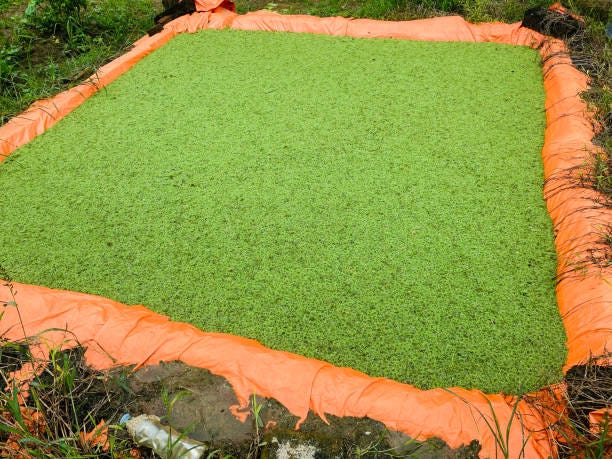
The plant looks like a simple green mat floating on water. However, farmers often describe it as “green gold” because it grows quickly, provides valuable nutrients and can support farm productivity at low cost.
What is Azolla?
Brian Aganyira of Bakuuku Azolla Farmers says Azolla is a tiny aquatic fern that grows naturally on ponds, swamps and slow-moving water bodies.
The plant has a unique relationship with a blue-green alga called Anabaena. This enables it to capture nitrogen from the atmosphere.
That natural process makes Azolla rich in protein and useful as a livestock feed supplement.
Under favourable conditions, Azolla can double its biomass within three to five days. This makes it one of the fastest-growing plants in the world.
Why farmers are adopting Azolla
For many livestock farmers, feed takes up the largest share of production costs.
Poultry, fish and dairy farmers often struggle with the rising cost of commercial feeds. Azolla offers an alternative that can be produced on the farm using locally available materials.
Aganyira says: “Azolla offers a cheaper alternative because it can be produced on the farm using locally available materials. Once established, a small Azolla pond can continuously provide fresh feed throughout the year.”
The plant contains between 20 and 30 percent protein on a dry matter basis.
It also contains essential amino acids, vitamins, minerals and antioxidants. These nutrients make it suitable as a supplementary feed for different farm animals.
Benefits for dairy cattle
Dairy farmers can mix fresh Azolla with grass, maize bran or other feeds.
Because of its protein content, the plant can improve feed quality, especially during dry seasons when pasture quality declines.
Some farmers report increased milk production when Azolla is regularly included in dairy cattle diets.
The plant is also soft, palatable and easy for livestock to digest.
How poultry farmers can use Azolla
Poultry farmers can mix fresh Azolla with other feeds for chickens, ducks, turkeys and guinea fowls, according to Aganyira.
He says, “Farmers who incorporate Azolla into poultry diets often report improved egg production, stronger eggshells, better growth rates, and reduced feed expenses. The plant also contains carotenoids that can enhance yolk colour in laying birds.”
However, experts advise farmers to use Azolla as a supplement, not as a complete replacement for commercial feeds.
This helps ensure birds receive balanced nutrition.
Feed option for fish, pigs and rabbits
Fish farmers can use Azolla as supplementary feed, especially in ponds stocked with tilapia and other herbivorous fish species.
The plant can be fed directly or mixed into formulated feeds.
Pig farmers can also chop Azolla and mix it with other feeds. This can reduce feeding costs while adding nutrients to the diet.
Rabbit farmers similarly use fresh Azolla as a protein-rich supplement.
Azolla can improve soil fertility
Azolla also supports crop production.
“Since it fixes atmospheric nitrogen, the plant acts as a natural fertilizer. Farmers can incorporate harvested Azolla into crop gardens where it decomposes and enriches the soil with nutrients,” says Aganyira.
Rice farmers in Asian countries have used Azolla for decades as a biofertilizer.
In Uganda, farmers can also apply it in vegetable gardens, banana plantations and other cropping systems.
The plant adds organic matter to the soil, improves soil structure and supports beneficial microorganisms.
How farmers can establish an Azolla unit
Azolla does not require much land.
Farmers can produce it in small ponds, lined pits, plastic sheets, old fish ponds or concrete tanks.
This makes it suitable for smallholder farmers who have limited space but need a steady source of supplementary livestock feed.
Environmental benefits of Azolla
Azolla farming also offers environmental benefits.
“The plant captures carbon dioxide from the atmosphere and helps improve water quality by absorbing excess nutrients. Its ability to fix nitrogen reduces dependence on chemical fertilizers,” Aganyira says.
Because it grows quickly and requires few external inputs, Azolla can support more sustainable farming systems.
For smallholder farmers facing climate change pressures, it can provide a low-cost resource that supports both livestock and crop production.
Challenges farmers should consider
Despite its benefits, Azolla farming has some challenges.
The plant needs a reliable water supply throughout the year. Long dry periods can reduce production unless farmers have access to irrigation or stored water.
“Extreme temperatures can also affect growth. In addition, farmers need proper training on feeding rates because excessive use may affect feed balance in some animals,” Aganyira says.
Farmers may also struggle to obtain quality starter cultures in areas where Azolla farming is still new.
Even so, Azolla presents a promising opportunity for Ugandan farmers seeking affordable ways to improve livestock productivity and food security.
With its high protein content, rapid growth, low production cost and soil improvement benefits, the small floating fern could become an important part of integrated farming systems.