
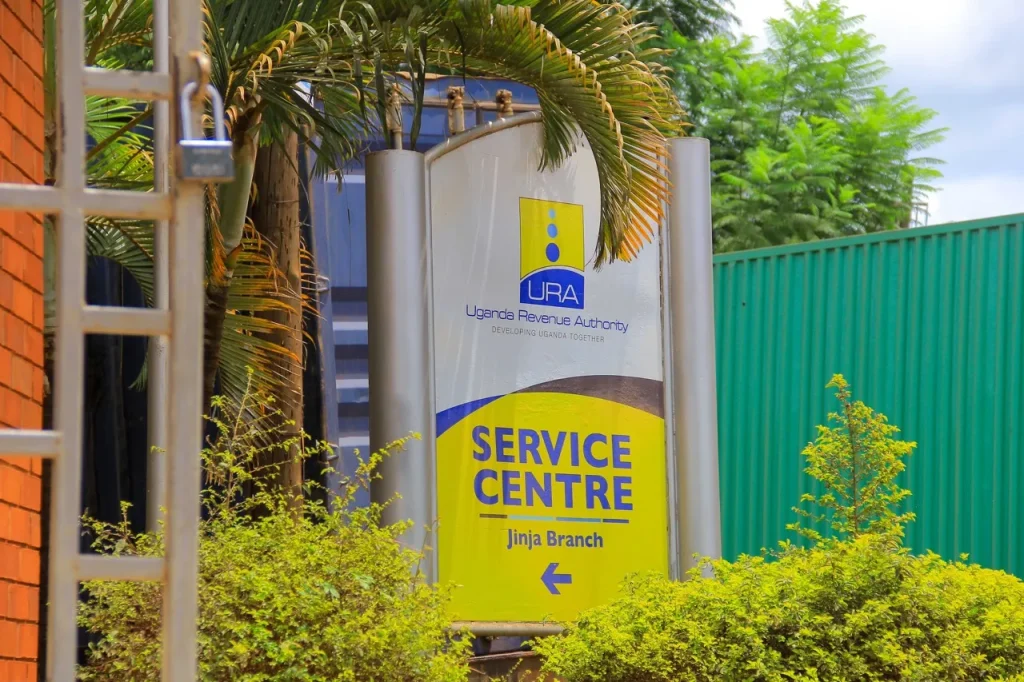
Uganda Revenue Authority (URA) has paid more than Shs2.4 billion to Canaan Sites Limited after accepting that it wrongly collected Value Added Tax on sales of unimproved land.
The payment follows a consent settlement between URA and the real estate developer. The agreement ended a long-running tax dispute that started before the Tax Appeals Tribunal and later moved to the High Court.
Under the consent judgment, URA agreed to refund Shs1.2 billion in unlawfully collected VAT. It also agreed to pay another Shs1.2 billion in interest and Shs36 million in legal costs.
“Whereas the Appellant (URA) lodged an appeal challenging the decision of the Tax Appeals Tribunal… by consent of both parties, it is hereby agreed that this appeal be fully settled on the following terms: the Appellant (URA) shall remit the full agreed sum of Shs2.4 billion within 30 days from the date of execution of this consent,” the consent judgment states.
Court records show that URA paid the principal amount and interest in May 2026.
In a letter dated May 21, 2026, URA Commissioner for Legal Services and Board Affairs, Ms Catherine Donovan Kyokunda, confirmed that the payments had been made.
“Following the conclusion of the reconciliation exercise, payment of the principal sum was effected on Monday, May 4, 2026, and interest on Friday, May 8, 2026. We trust that this brings the matter to a close,” Ms Kyokunda wrote.
Tribunal Faults URA Over VAT Collection
The dispute arose from a 2024 decision by the Tax Appeals Tribunal. The Tribunal found that URA had illegally collected VAT from Canaan Sites on transactions involving unimproved land.
Canaan Sites argued that sales of unimproved land are exempt supplies under the Value Added Tax Act. The company said URA had no legal basis to collect the tax and asked for a refund, interest, and legal costs.
URA opposed the claim. It argued that Canaan Sites had not proved that the money qualified for a refund.
The tax body said the company had claimed about Shs1.7 billion for the period between January 2013 and February 2017. However, URA accepted liability for only about Shs533 million, covering the period when the company was not VAT-registered.
URA also argued that Canaan Sites had not shown that it paid the VAT from its own resources. It claimed the tax may have been passed on to buyers through land sale transactions.
“The lack of explicit language in the sale agreements indicating VAT exclusivity implies the process was VAT-inclusive,” URA argued before the Tribunal.
Canaan Sites Proved VAT Was Paid From Its Own Funds
The three-member Tribunal, chaired by Ms Proscovia Nambi, ruled in favour of Canaan Sites after reviewing VAT returns, newspaper advertisements, sale agreements, and bank statements.
The Tribunal found that the company had shown that it paid the disputed VAT from its own funds and profits.
“The Tribunal concludes that the Respondent’s (URA) retention of the unlawfully collected VAT amounts to unjust enrichment,” the panel ruled.
The other Tribunal members were Ms Christine Katwe and Ms Grace Safi.
The panel also found that URA had not provided evidence showing that the VAT burden had been transferred to customers. It also noted that URA did not prove that tax invoices had been issued.
“The absence of evidence demonstrating that the VAT was passed on to customers, or that tax invoices were issued, as well as the Respondent’s witness’s testimony that no customer has since claimed the refundable amounts, further fortifies this conclusion,” the Tribunal observed.
The Tribunal declared URA’s VAT collection on the sale of unimproved land unlawful. It then ordered the tax body to refund the money.
Interest Awarded Over Delayed Refund
The Tribunal also ordered URA to pay interest on the delayed refund.
It ruled that delayed tax refunds deny taxpayers the chance to use their money for investment, business growth, or working capital.
“The result is an opportunity cost, the potential gains forgone due to the inability to utilise the funds promptly. This requires the Respondent to pay interest on delayed refunds and to compensate taxpayers for the delay,” the Tribunal ruled.
The Tribunal ordered interest at two percent per month from the date the tax was collected until the refund date, subject to the statutory cap.
Lawyers Say More Than Shs500 Million Remains Disputed
Despite the Shs2.4 billion payment, Canaan Sites’ lawyers say the dispute may not be fully resolved.
Mr Elvis Ndikuno Nyanga of ELDA Advocates, who represented the company, said on Sunday that more than Shs500 million remains outstanding.
He said the amount relates to taxes allegedly collected in error between 2013 and 2015.
According to Mr Nyanga, efforts to recover the balance are still ongoing.