
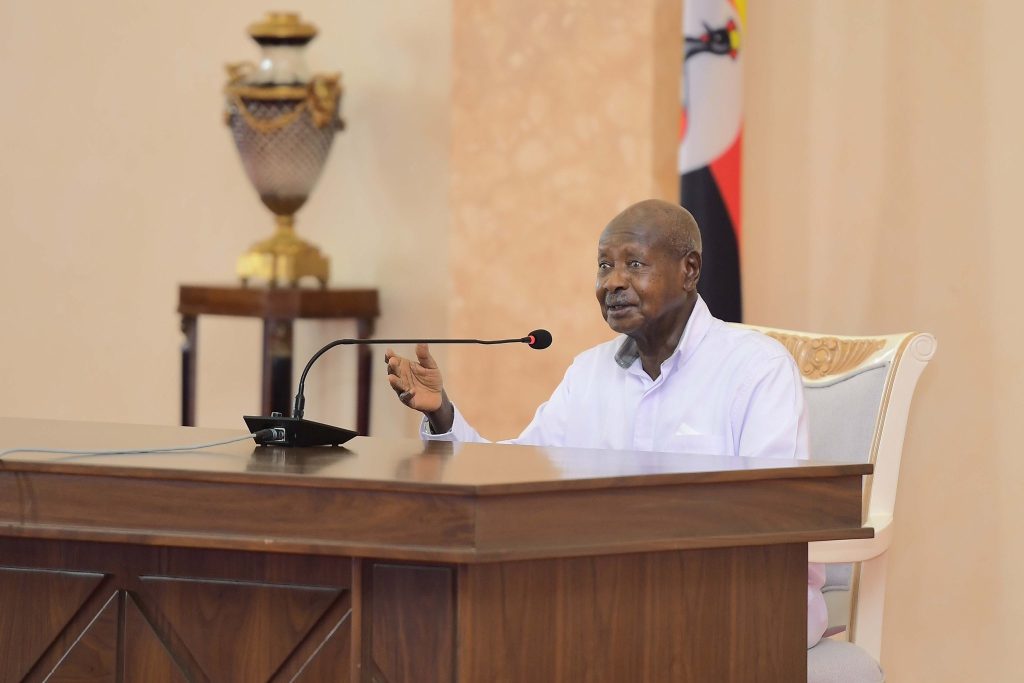
The Uganda Law Society has criticised President Yoweri Museveni over his comments on Dr Kizza Besigye’s ongoing treason trial, saying the remarks amount to interference with the administration of justice.
The lawyers’ body said Museveni’s televised address on Saturday evening risked undermining Besigye’s right to a fair hearing.
During the address, Museveni accused Besigye of delaying his own trial by repeatedly challenging court proceedings instead of defending himself against the charges.
The President questioned why an accused person should be allowed to delay a criminal trial for a long period.
He argued that if Besigye believes the charges are politically motivated, he should use the court process to prove his innocence.
Museveni also criticised the continued granting of bail in serious criminal cases. He argued that suspects who intimidate witnesses should not easily be released while awaiting trial.
ULS says remarks violate sub judice rule
In a statement issued shortly after the address, the Uganda Law Society said the President had commented on an active criminal case.
ULS said the remarks violated the sub judice principle and could prejudice proceedings before court.
ULS president Isaac K. Ssemakadde called on the Chief Justice, the Judiciary’s top management and judicial associations to publicly reject what he described as executive interference in judicial work.
“The President’s address constitutes clear sub judice contempt of court,” the statement said.
The society argued that Museveni had publicly discussed the motives, conduct and merits of a case still before the courts.
Lawyers defend bail and presumption of innocence
The ULS also criticised Museveni’s renewed position on bail.
It said the President’s remarks amounted to an attack on constitutional protections of personal liberty and the presumption of innocence.
The lawyers’ body cited Articles 23 and 28 of the Constitution.
According to ULS, only courts have the power to decide whether an accused person should be granted bail.
The society said the executive cannot dictate such decisions.
Ssemakadde added that abolishing bail would contradict Uganda’s constitutional framework and international legal standards.
He cited the United Nations Standard Minimum Rules for Non-custodial Measures, also known as the Tokyo Rules.
He also cited the African Commission’s Luanda Guidelines and the UN Basic Principles on the Independence of the Judiciary.
“Banning bail will not protect witnesses. It will instead punish the innocent and shield systemic failures from scrutiny,” the statement said.
Judiciary urged to defend independence
The Uganda Law Society called on Museveni to stop making public comments on pending court cases, including Besigye’s trial.
It said such comments weaken judicial independence and public confidence in the justice system.
The society also urged the Judiciary to publicly defend its independence.
It referred to the position taken by magistrate Sheilla Gloria Atim in Uganda v. Miria Matembe, Luzira Criminal Case No. 132 of 2026.
ULS described the case as an example of judicial officers resisting external interference.
The lawyers’ body also called on government to address wider problems in the justice sector.
It cited judicial inefficiency, corruption, weak witness protection, and alleged political and military interference in judicial processes.
Besigye case remains before civilian courts
Besigye is facing treason charges before civilian courts.
His case was transferred from the military justice system after the Supreme Court ruled that civilians cannot be tried before military courts.
Since the transfer, the case has faced several legal disputes over prosecution conduct and management of the proceedings.
The Uganda Law Society said it remains committed to defending constitutionalism, the rule of law and the independence of the Judiciary.