
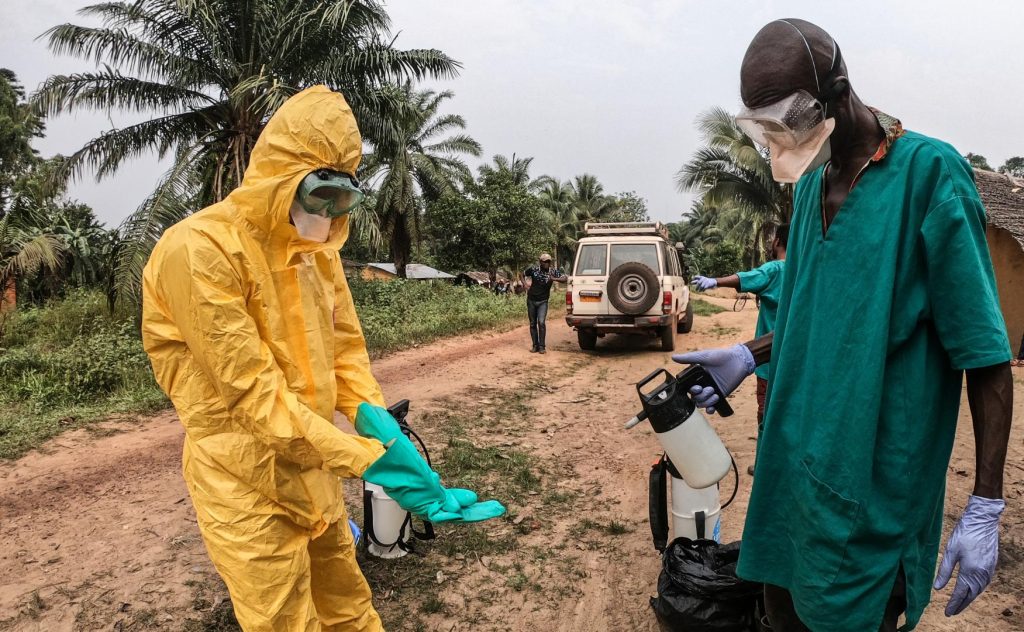
Uganda is preparing to deploy 80 health workers and establish two temporary Ebola treatment centres in the Democratic Republic of Congo as part of efforts to contain the Ebola Virus Disease epidemic and reduce cross-border transmission.
Dr Diana Atwine, the Permanent Secretary at the Ministry of Health, told Nation Media Group in an exclusive interview that the team could be sent this week if preparations proceed as planned.
She said Uganda intends to set up two mobile laboratories and isolation/treatment centres in affected areas of DR Congo to manage Ebola cases closer to the source and discourage patients from crossing into Uganda in search of care.
“Due to our proximity to the Ebola epicentre, we believe that we will not be able to stop the inflow of patients because they are looking for care (in Uganda),” she said.
“So, the best is to make sure that we go to the source and we work with our counterpart in DRC. We are going to set up a mobile laboratory, so that we can quickly test and also isolate those that are sick,” she added.
Dr Atwine said the treatment centres are planned for Aru and Kasenyi, with a third facility in Mahagi under consideration if the outbreak worsens.
“In each treatment centre, we are deploying 40 people,” she said.
According to Dr Atwine, the teams will include doctors, nurses, laboratory personnel, infection control specialists, epidemiologists, and acute care staff. Some of the health workers will be drawn from Uganda’s standing contingency team that responds to epidemics.
“We are sending doctors, nurses, laboratory people, specialists in infection control, epidemiologists, and acute care people. Part of this staff are from our contingency team that always responds to epidemics,” she said.
“But also we are adding the partners going to support us with some, to pay. So we are giving contracts to some staff, especially those that always volunteer in some of these epidemics. We’re going to give them contracts and then they go with our team,” she added.
Dr Atwine said the joint response would help Uganda, DR Congo, and the wider region reduce the duration of the Ebola epidemic and limit its economic disruption.
“If we test early, isolate and treat the sick, then you control the numbers. This has two advantages. One, we will reduce the period of this epidemic in both countries, if we go the other side, than waiting,” she said.
“This will also help Uganda to prevent people from travelling long distances from the DRC to come to Uganda for medical care, and therefore cause even more people here to fall sick,” she added.
She noted that patients travelling from DR Congo often use taxis and boda bodas, making contact tracing difficult once they enter Uganda.
“That is why we think that working with the local community, the Congolese community here will be of great help,” she said.
Dr Atwine said early testing, isolation, and reduced contact remain the most effective tools in stopping the spread of Ebola.
“Ebola magic bullet is not big science. It is simple: test quickly the potential person who is sick, isolate that person and make sure that you have less contact with this sick person. That is it,” she added.
Uganda has already introduced tough preventive measures, including restrictions on movement across the border with DR Congo, in an effort to stop the virus from spreading.
“Even businesses within those districts are affected, because we suspended markets, the flights are suspended, the human traffic has significantly reduced around the border,” Dr Atwine observed.
“Meaning that also the activities on the border are being affected. This is why we want this Ebola to end quickly.”
Meanwhile, the United Arab Emirates has suspended the issuance of all new visas for Ugandan nationals and banned travellers from the country, citing measures aimed at preventing the spread of Ebola.