
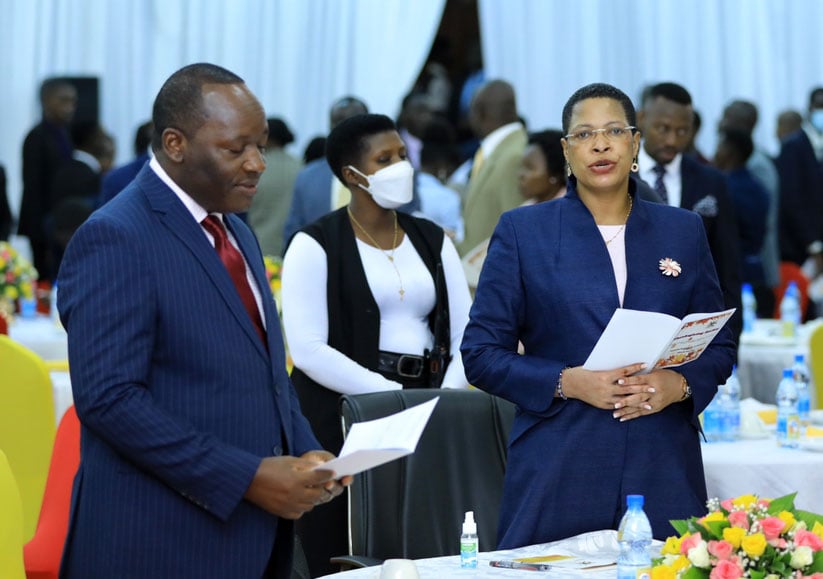
Security experts have raised concerns over the handling of the money-laundering investigation involving former Speaker of Parliament Annet Anita Among, warning that alleged procedural errors could weaken the case and expose the government to legal claims.
The investigation began on May 16, 2026. Since then, detectives from the Criminal Investigations Directorate, forensic specialists and defence intelligence operatives have searched properties linked to Among in Nakasero, Kigo, Ntinda and Bukedea.
Security agencies also seized six luxury vehicles, including her well-known Rolls-Royce.
However, experts familiar with money-laundering and corruption investigations say the process may have departed from established legal procedure.
They argue that investigators seized assets before obtaining court orders to restrain them and before securing a conviction linking the property to proceeds of crime.
Experts Question Asset Seizures
A retired senior CID detective who served during the tenure of Grace Akullo said money-laundering investigations are normally built on predicate offences.
Such offences may include theft, fraud, robbery, burglary or other crimes that generate illegal proceeds.
Speaking on condition of anonymity, the retired detective said investigators must first trace assets and establish their link to a suspected offence before seeking court intervention.
“The proper procedure is to begin with asset tracing. Upon confirming ownership of a company, building or vehicles, investigators should seek a court restraining order to prevent the disposal of identified assets. The money laundering case is then presented in court, and upon conviction, asset recovery is pursued,” he said.
According to him, investigators appeared to reverse that process.
“All the required procedures were ignored. They did at the beginning what should have been done at the end. The standard money laundering investigation process is asset tracing, freezing, prosecution and recovery,” he said.
He argued that assets should not be confiscated before a court determines that they are proceeds of crime.
“Given her position, I doubt she wants to be in conflict with government. But you cannot confiscate assets without a court conviction establishing that they are proceeds of crime. In this instance, however, the process began with confiscation. If you seize someone’s property without convincing court that it’s proceeds of crime, you give them grounds to sue government. And if they win for violation of their rights, the financial hit to government can be huge,” he added.
Questions Raised Over Vehicle Custody
The retired detective also questioned why the seized vehicles were taken to the Naguru police forensic services unit.
He said the facility does not have the technical expertise needed to assess or maintain high-value vehicles such as a Rolls-Royce.
He argued that assets awaiting court determination should be kept by an independent institution with the capacity to preserve them.
“What are they going to do with that vehicle? If the issue is identification of the type and specifications, the ministry of Works should provide a chief government engineer, not forensic officers. They lack that expertise. Forensics only handle paper trails. Do they even know how to establish the market value of a Rolls-Royce for Uganda Police?” he asked.
According to him, the vehicles should only have been taken to Naguru for secure storage.
He also warned against police acting as investigators, custodians and expert witnesses in the same complex economic crime matter.
Egesa Says Probe Appeared Hurried
Private investigator Fred Egesa, who has experience in money-laundering and corruption matters, agreed that the investigation appeared poorly sequenced.
He said investigators should have considered the political sensitivity of the case before taking highly visible enforcement action.
“Where politics is involved, you must be conscious of public perception. You can’t just go after Among first. She is a political figure with a following. Right now she is almost vindicated of fraud, not because of innocence or guilt, but because of the high-handed and vindictive way the investigations began,” Egesa said.
He argued that investigators should have first focused on officials directly responsible for managing parliamentary funds.
According to Egesa, those officials would then lead investigators to any suspected beneficiaries of the alleged proceeds.
“What they have done now is the right thing. Audit and charge, and let those who had custody of the money lead you to the end user. Not charge and then audit. Anita was not the accounting officer, so there was no way she would be the first person to be targeted,” Egesa said.
Parliament Officials Charged
The concerns come after seven parliamentary officials were arrested, charged before the Anti-Corruption Court and remanded to Luzira prison.
They include Chris Obore Ariko, director of communications and public affairs; Daniel Adilo, director of human resource; Leonard Okema, executive secretary in the Office of the Speaker; Rajab Kaaya Ssemalulu, principal research officer; Emmanuel Emuron Okwi, principal protocol officer; and capacity development officer Vincent Otebata.
The officials face offences including corruption, embezzlement, money laundering and causing financial loss.
The charges relate to the alleged mismanagement of Shs37 billion.
Legal Risks for Government
The experts said Uganda has investigators capable of handling complex financial crime cases professionally.
However, they claimed this particular investigation appeared shaped by political objectives rather than established investigative practice.
They also argued that the alleged procedural gaps could explain the repeated postponement of Among’s expected court appearance.
According to them, investigators may still be trying to address weaknesses in the case file.
They warned that if the gaps are not fixed, prosecutors could face a weak case in court.
They also said the matter could damage the credibility of the state if courts find that investigators violated the rights of affected parties.