
Human rights defenders and legal experts have criticised a recent Constitutional Court ruling that nullified a key provision of the Human Rights (Enforcement) Act, warning that the decision could weaken protections against torture and other serious rights violations.
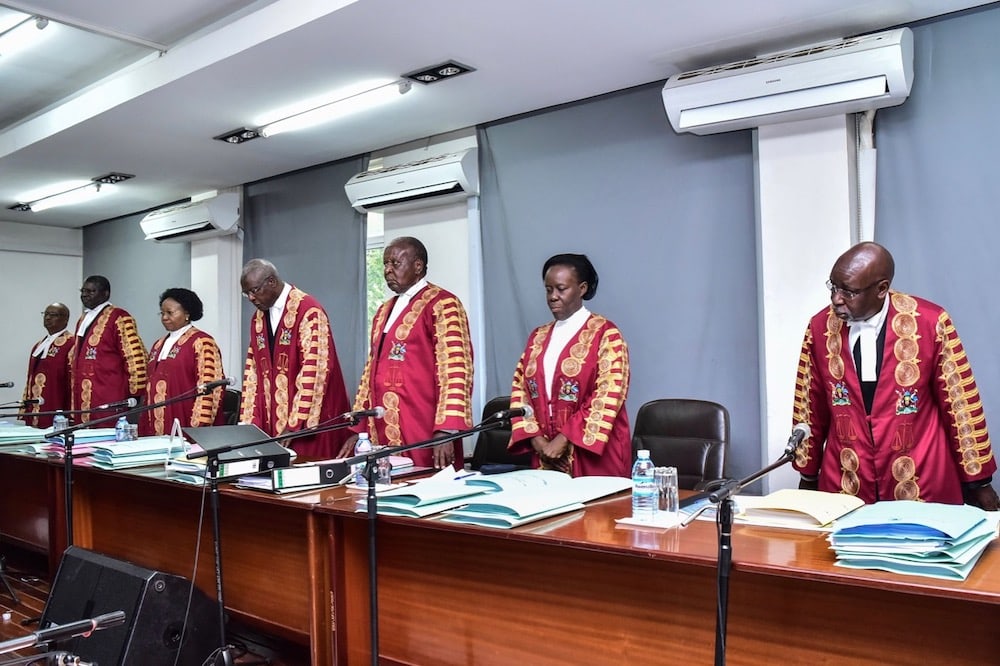
In a unanimous judgment delivered last week, Justices Oscar Kihika, Margaret Tibulya, Moses Kawumi Kazibwe, Musa Ssekaana and Asa Mugenyi declared Section 11(2) of the Human Rights (Enforcement) Act unconstitutional.
The provision had allowed courts to terminate criminal proceedings and acquit accused persons where their non-derogable rights, including freedom from torture, had been violated by State security actors.
“In light of the foregoing, we are persuaded that Section 11(2) of the Act is inconsistent with, and therefore contravenes Articles 28(3)(a), (b), (c) and (d) of the Constitution,” the justices ruled.
The court held that an acquittal should not automatically follow allegations of rights violations. Instead, the judges said such claims should be subjected to a structured evidentiary inquiry in line with constitutional requirements.
However, the ruling has drawn strong criticism from rights advocates, who say it removes one of the strongest deterrents against torture during criminal investigations.
Dr Livingstone Ssewanyana, the executive director of the Foundation for Human Rights Initiative, said the decision undermines Uganda’s efforts to fight torture.
“We disagree with the court decision. The essence of creating the Human Rights Act was to stop torture and to ensure courts do not rely on evidence obtained through torture. Accepting evidence procured through torture is more of granting a licence to perpetrators,” Dr Ssewanyana said at the weekend.
He added: “It reverses the gains we had made in fighting torture. It gives liberty to perpetrators knowing that even if they torture suspects, their trial will still continue.”
Dr Ssewanyana said freedom from torture is protected under Article 44 of the Constitution as a non-derogable right.
The Uganda Law Society also criticised the ruling, describing it as a setback for the protection of fundamental rights.
“The Court’s declaration that Section 11(2) of the Human Rights (Enforcement) Act, 2019 is unconstitutional represents a regrettable retreat from the protection of non-derogable rights,” the lawyers’ body said in a statement signed by its president, Mr Isaac Ssemakadde.
“It undermines core constitutional, regional and international safeguards against torture and other gross violations,” the statement added.
The Uganda Law Society argued that the ruling places greater emphasis on completing criminal trials than on enforcing the absolute prohibition of torture and other grave rights violations.
Constitutional lawyer Erias Lukwago also criticised the judgment, saying it had weakened a key constitutional safeguard.
“With this decision, our constitutional jurisprudence has been watered down. Those rights are non-derogable. This is now a licence for the State to torture citizens with impunity,” Mr Lukwago said.
Counsel Jude Byamukama, one of the lawyers involved in the proceedings, said he hoped the Supreme Court would overturn the decision on appeal.
“We hope the Supreme Court will overturn it. It is not only about torture but also about non-derogable rights and a fair hearing. The law created a provision that if there is no fair hearing, the charges are dismissed. That principle exists in many jurisdictions that value the protection of citizens’ rights like USA, UK, and even Kenya here,” he said.
Human rights lawyer Nicholas Opiyo also faulted the ruling, saying it reversed progress made in enforcing the prohibition against torture.
“Respectfully, the Justices of the Constitutional Court got it absolutely wrong, and I hope the appellate court will correct the misapplication and misinterpretation of the law,” Mr Opiyo said.
“The protection of an accused person’s rights is the cornerstone of the criminal justice system because of the disproportionate power of the State during investigations and prosecutions,” he added.
Mr Opiyo argued that attempting to balance the rights of complainants against those of accused persons in cases involving torture risks favouring the State and legitimising abusive investigative methods.
The Constitutional Reference arose from proceedings involving Mr Paul Akamba, a co-accused person in corruption-related cases before the High Court.
Mr Akamba alleged that after being granted bail in one criminal case, he was abducted by security agents from court premises, detained incommunicado for seven days in an ungazetted facility, tortured and pressured to confess to criminal charges.
He later filed an application seeking dismissal of the criminal proceedings against him under the Human Rights (Enforcement) Act, arguing that his non-derogable rights had been violated.
During the hearing, lawyers representing the Attorney General challenged the constitutionality of Sections 7, 8 and 11(2) of the Act. They argued that the provisions allowed accused persons to be acquitted without trial, denying victims and society the opportunity to have criminal allegations determined by court.
The Attorney General further argued that although the Constitution requires protection of human rights, remedies for violations should be proportionate and should not automatically bring criminal proceedings to an end.
The Constitutional Court agreed with that position, finding that the impugned provisions were inconsistent with the constitutional framework on fair hearing rights.
The decision is expected to be appealed before the Supreme Court. The final outcome could have major implications for the enforcement of non-derogable rights and the conduct of criminal prosecutions in Uganda.