
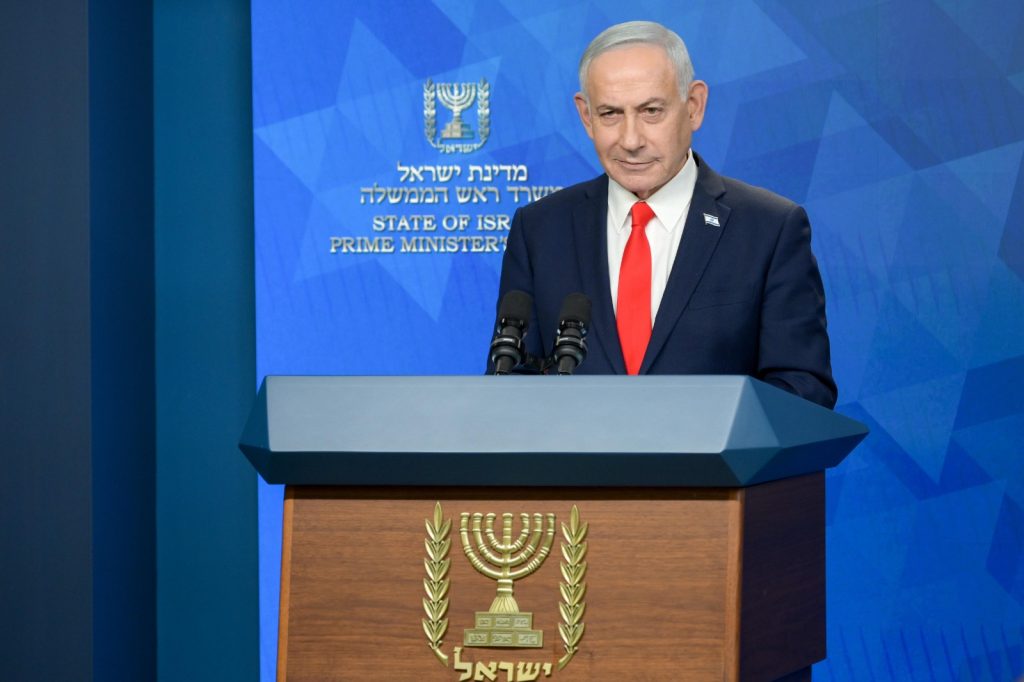
Israeli Prime Minister Benjamin Netanyahu is heading into a difficult election season after a US-backed deal with Iran complicated his wartime message and exposed fresh tensions with Washington.
Netanyahu, 76, has confirmed that he intends to seek another term in an election that must be held by October.
His path back to power already looked uncertain.
Opinion polls suggest his right-wing coalition could lose. However, Netanyahu has survived many political crises since the 1990s, and few Israelis would completely rule out another comeback.
Iran Deal Changes the Political Ground
The interim US deal with Iran has added a new challenge for Netanyahu.
US President Donald Trump has moved to end the wars involving Iran and Lebanon before Israel achieved all its stated goals.
That has weakened Netanyahu’s earlier claim that Israel was “changing the face of the Middle East.”
The Israeli leader must now face voters who will judge his handling of several wars, his relationship with the United States and his government’s response to the October 7, 2023 Hamas attack.
He also remains under pressure from domestic controversies and a corruption trial, where he denies wrongdoing.
Netanyahu’s Security Image Under Pressure
Netanyahu’s Likud party has long presented him as a hardline security leader.
Supporters credit him with resisting pressure for a Palestinian state and confronting Iran and its regional allies.
“There will be no Palestinian state to the west of the Jordan River,” Netanyahu said in 2025.
He added: “For years I have prevented the creation of that terror state, against tremendous pressure.”
However, the October 7 attack badly damaged his reputation as Israel’s strongest security figure.
Critics say his government shifted attention away from the Gaza border and underestimated Hamas as a real threat.
Netanyahu has not accepted responsibility for the security failures that preceded the attack.
Military Successes, Limited Political Results
Israel recorded major military gains during the wars in Gaza, Lebanon and Iran.
The killings of Hezbollah leader Hassan Nasrallah and Iran’s supreme leader, Ayatollah Ali Khamenei, were celebrated by many Israelis.
But Netanyahu’s critics say those operations did not produce lasting political victories.
Hamas still controls parts of Gaza. Hezbollah has survived in Lebanon. Iran’s political system also remains in place despite heavy losses.
Tens of thousands of people have been killed in Israeli strikes in Gaza and Lebanon, while Israel’s military death toll has reached its highest level in decades.
Although many Israelis initially backed the Gaza war, criticism grew over Netanyahu’s management of it.
Some hostage families and former senior military figures accused him of lacking a clear long-term strategy.
Opposition Accuses Netanyahu of Failure
Opposition leader Yair Lapid said Trump’s move to impose a new Israel-Hezbollah truce as part of the Iran deal showed Netanyahu had failed.
“Netanyahu lost the war. Netanyahu did not deliver – at the moment of truth he collapsed,” Lapid said.
Netanyahu has rejected such criticism.
He says his opponents are trying to minimise Israel’s military achievements.
Warning about Iran’s nuclear ambitions, Netanyahu said: “If we had not acted in time and with overwhelming force – we would not be here today.”
International Pressure Grows
The war in Gaza has drawn international condemnation.
Israel has rejected accusations of genocide.
The International Criminal Court issued an arrest warrant for Netanyahu on war crimes charges, a move he dismissed as absurd.
His government has also faced rising criticism over settlement expansion in the occupied West Bank and attacks on Palestinians there.
These developments have increased international calls to revive the peace process.
At home, however, many Israelis believe Western criticism of Israel’s Gaza campaign after the Hamas attack has been unfair.
Relations With Washington Become Strained
Netanyahu has spent years courting Western support for Israel.
But he has also clashed with US presidents and other world leaders.
A biographer quoted former US President Joe Biden as privately calling Netanyahu a “son of a bitch” and “a bad fucking guy.”
Netanyahu’s close relationship with the Republican Party has also strained Israel’s traditional bipartisan support in the United States.
Support for Israel has declined among voters in both major US parties.
Trump has been the US president most closely associated with Netanyahu.
But even that relationship has shown strain.
During a June phone call, Trump reportedly called Netanyahu “fucking crazy.”
Rival Israeli politicians have also accused Netanyahu of bowing to US pressure.
Corruption Trial and Domestic Protests
Netanyahu won a sixth term in 2022 despite facing a corruption trial.
He returned to power with nationalist parties that support an openly expansionist agenda.
Their push to curb the Supreme Court triggered the largest protests in Israel’s history in 2023.
Those protests exposed deep divisions over democracy, judicial independence and the direction of the state.
The October 7 attack and the wars that followed shifted national attention to security.
But Netanyahu’s opponents argue that the same questions about governance and accountability remain unresolved.
A Legacy Under Contest
Netanyahu once hoped his legacy would rest on the Abraham Accords.
The 2020 agreements normalised or expanded Israel’s ties with four Arab countries.
He wanted to prove that Israel could improve relations with the Arab world without accepting Palestinian self-determination.
The October 7 attack and Gaza war made that goal much harder.
Israel’s standing in the West has also suffered.
As the country moves toward elections, Netanyahu’s legacy looks increasingly contested.
To his supporters, he remains the leader who confronted Iran, weakened Israel’s enemies and resisted pressure over a Palestinian state.
To his critics, he is a leader who presided over one of Israel’s worst security failures and failed to convert military power into lasting peace.