
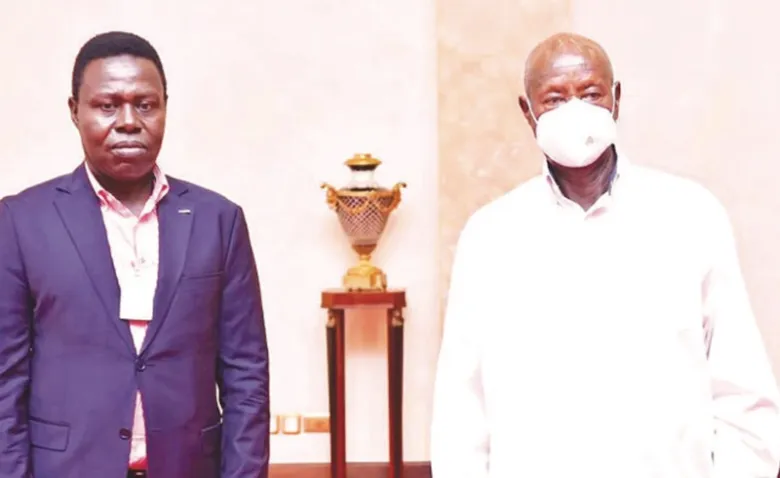
Uganda’s leading religious leaders have welcomed President Yoweri Museveni’s support for scientific research into a herbal medicine developed by researcher David Ssenfuka.
Ssenfuka says the medicine, produced from indigenous plants, could help treat cancer and diabetes. However, it must undergo laboratory analysis, clinical trials and regulatory review before authorities can approve it.
For more than 13 years, Ssenfuka has approached ministries, scientists, politicians and international organisations seeking support for the project.
The Inter-Religious Council of Uganda said Museveni’s intervention could help the medicine move through Uganda’s formal scientific and regulatory systems.
The council also said properly conducted research could strengthen public confidence in indigenous medicine.
“We commend the President for supporting indigenous research and innovation and for providing an opportunity for innovators such as Mr Ssenfuka to engage with relevant government institutions. Strengthening research programs on herbal medicine will build public trust in local remedies. Currently, scepticism persists because outcomes are uncertain,” the statement said.
IRCU Secretary General Joshua Kitakule signed the statement.
Museveni introduces Ssenfuka to religious leaders
The endorsement followed a recent meeting between Museveni and members of the Inter-Religious Council.
Sources familiar with the meeting said religious leaders first discussed national affairs with the President. They reportedly raised concerns about Uganda’s human rights situation.
Those present included Church of Uganda Archbishop Stephen Kaziimba Mugalu and Catholic Bishops’ Conference president Bishop Anthony Zziwa.
Mufti Sheikh Shaban Ramathan Mubaje, Bishop Joshua Lwere and Dr Joseph Sserwadda also attended. Orthodox Archbishop Jeronymos Muzeeyi joined the delegation.
Museveni later introduced the leaders to Ssenfuka.
According to Kitakule, Ssenfuka explained the history of his research and his plans to make the medicine affordable in Uganda and other countries.
Some of the religious leaders had met him before.
“Seven years ago, the IRCU had met Mr Ssenfuka through Bishop Joshua Lwere… and made some recommendations. We are happy that his efforts are paying off now. IRCU believes Uganda should encourage and protect local innovation. Our country has abundant medicinal plants, talented researchers and indigenous knowledge that, if properly researched and developed, can make a significant contribution,” Kitakule said.
Bishop Lwere defends indigenous innovation
Bishop Joshua Lwere urged Ugandans not to reject local innovations before researchers subject them to proper scientific examination.
“I want to speak to the general public not to be derailed by people who are going to speak against this,” Lwere said.
“These people have got a colonial mind. They think that if something is local, then it cannot be good. That it can only be important if it is coming from the laboratories of Europe and the United States. This is a very wrong mentality, especially when it comes from people who are educated, because some of them have been sponsored by foreign interests. The same factories that make this medicine are the ones sponsoring them such that if they support the local person, they will be rivalling their sponsors.”
Lwere said religious leaders were prepared to encourage public support for the research.
“We are ready to speak to the public to support these efforts,” he said.
He also said he knew people who claimed to have benefited from Ssenfuka’s treatment.
“Before condemning Ssenfuka, first talk to people who have testimonies. There are very important people in this country who have given testimonies. You cannot say people like judges, ministers, professors are all lying. It disturbs me that anybody can say this man is a conman. I think before you write anything accusing this man of being a conman, first speak to these people. They are very responsible people who cannot lie for anything. So, before you say or write anything, first do due diligence otherwise, if the President had not listened to Ssenfuka before, this project would be dead.”
Patient testimonies alone do not establish whether a medicine is safe or effective. Scientific validation would require controlled testing and approval through the relevant institutions.
Ssenfuka threatens legal action against Andrew Mwenda
Lwere’s comments followed criticism of the project by journalist Andrew Mwenda.
Mwenda questioned the project’s credibility and accused Ssenfuka of misleading the government into financing what he described as a fraudulent venture.
Ssenfuka rejected the accusations and said he had instructed his lawyers to sue Mwenda for defamation.
“I have been on this project for more than 10 years but in one stroke, my lifelong work was mocked as fraud,” Ssenfuka told The Observer.
“I maintain that Mwenda’s words are entirely false. As a result, I have been lowered in the eyes of right-thinking members of society and have come to be regarded with hatred. That’s why I have instructed my lawyers to sue Andrew Mwenda.”
Ssenfuka said government agencies had started outlining how they could support the project.
He said the Science, Technology and Innovation Secretariat under the Office of the President recently wrote to him about possible cooperation.
“They have said that they are committed to supporting the systematic development of my drug and facilitate its progression through the requisite scientific, regulatory and institutional pathways. But so far, nothing much has concretized,” he said.
The statement indicates that the project would still need to pass through the required scientific and regulatory stages.
Government support for research does not itself amount to approval of the medicine or confirmation of Ssenfuka’s treatment claims.
Research campaign stretches over 13 years
Ssenfuka has spent more than 13 years seeking support for laboratory studies, clinical trials and regulatory approval.
In 2020, he sued the Government of Uganda and the World Health Organization.
He argued that the project could not secure internationally recognised validation or patents without support for human clinical trials.
The Attorney General later pursued an out-of-court settlement. However, Ssenfuka said the settlement did not lead to substantial progress.
Several prominent Ugandans have also urged the government to give the project greater attention.
They include former Chief Justice Wako Wambuzi and former Makerere University Vice Chancellor Prof John Ddumba-Ssentamu.
Former Katikkiro Joseph Mulwanyammuli Ssemwogerere and former High Court judge John Bosco Katutsi also wrote in support. Minister Kahinda Otafiire also raised the matter with the government.
“This has been a very long journey; we have tried everything,” Ssenfuka said.
He said Museveni expressed surprise that he had not learnt about the project earlier.
“When I was introduced to him, he wondered why he did not know me earlier yet I’m doing a very commendable job.”
Ssenfuka said he had also sought support outside Uganda.
“Do you know that we even wrote to the former President of America Joe Biden asking him to take interest in this drug? You know he had lost a son to cancer. Of course, some of those efforts paid off because we had got some people from America who were willing to invest in the project.”
He also credited former Science and Technology minister Dr Elioda Tumwesigye with funding the preparation of research protocols.
“If he had stayed in that ministry longer, maybe we would already have had this drug processed and on the market. But the people who replaced him were not as active. But we thank God that finally the President took interest in the project.”
Approval depends on clinical and regulatory testing
The religious leaders’ endorsement has given Ssenfuka’s campaign renewed public attention.
However, the project’s future will depend on whether researchers can produce reliable evidence about the medicine’s safety, quality and effectiveness.
It will also need to satisfy Uganda’s scientific, clinical and regulatory requirements before authorities can approve it for patients.
For Ssenfuka, the latest government and religious support marks progress in a campaign that has lasted more than a decade.
It does not yet establish that the herbal medicine can treat cancer or diabetes.