
The search and seizure operations targeting properties linked to Ms Anita Annet Among, including the impounding of her Shs3.4 billion Rolls-Royce, have triggered fresh questions about the role of the army in Uganda’s anti-corruption fight.
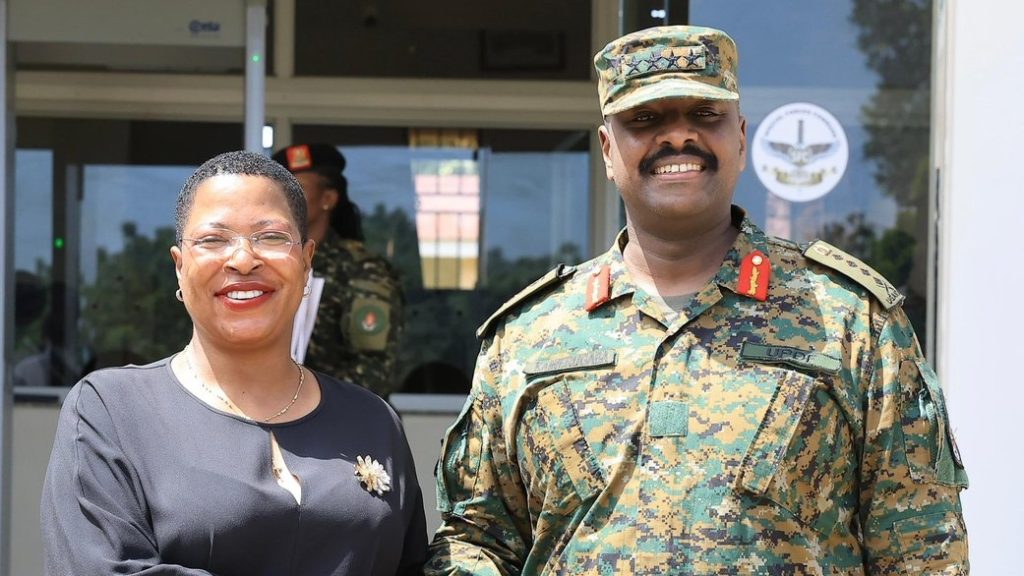
At the centre of the debate is Gen Muhoozi Kainerugaba, the Chief of Defence Forces (CDF), who is also President Museveni’s son and advisor on Special Operations. Gen Muhoozi has taken a visible role in the operation, which began on May 16 and has since drawn attention to whether corruption investigations fall within the mandate of the Uganda People’s Defence Forces (UPDF).
Former legislator Dan Wandera Ogalo argues that the army has no constitutional role in probing corruption. He points to Article 209 of the Constitution, which outlines the functions of the UPDF.
Article 209 assigns the army the duty to preserve and defend Uganda’s sovereignty and territorial integrity, cooperate with civilian authorities during emergencies and natural disasters, promote harmony between the defence forces and civilians, and engage in productive activities for national development.
Mr Ogalo says none of those functions includes investigating corruption matters.
Mr Godber Tumushabe, associate director at the Great Lakes Institute for Strategic Studies (GLISS), also questioned the involvement of the military in the operation. He said institutions created under the Constitution already have specific mandates and that the army should not be carrying out law enforcement work.
Mr Ogalo described the military’s involvement in investigations relating to Parliament as a form of power grab, saying institutions such as the Inspectorate of Government, the Auditor General and existing leadership code mechanisms are responsible for such matters.
However, Mr Marlon Agaba of the Anti-Corruption Coalition Uganda holds a different view. He said that if the CDF’s intervention strengthens the fight against corruption, then it should be welcomed. He added that the Executive, especially the President, may have been frustrated by the performance of statutory anti-corruption agencies.
Former Luuka County MP Meddie Mulumba, who also chairs the ruling National Resistance Movement party in Luuka District, was more critical of existing institutions. He questioned the visibility and effectiveness of agencies such as the Director of Public Prosecutions, the Inspectorate of Government, the Auditor General, the Financial Intelligence Authority, accounting officers, the Internal Security Organisation and the External Security Organisation.
Mr Mulumba said Ugandans were left wondering whether those bodies had been compromised or had failed to act.
The debate comes against the backdrop of earlier corruption concerns involving Parliament. In March 2024, then Inspector General of Government Beti Kamya announced that her office had opened an unprecedented investigation into allegations of corruption and unethical conduct at Parliament.
Her announcement followed an online campaign by Agora Center for Research under the hashtag #Ugandaparliamentexhibition on X, formerly Twitter. The campaign highlighted allegations including illegal recruitment of parliamentary staff, large cash withdrawals from Parliament’s corporate social responsibility fund, and other suspected abuses of public resources.
At the time, Ms Kamya said the allegations had attracted major public and media interest and could not be ignored.
However, less than a month later, she appeared to step back from the probe, citing the need to avoid duplication because the Auditor General was also reportedly investigating Parliament. She said investigative agencies usually avoid crowding one another when one institution is already handling a matter.
Ms Munira Ali, the Inspectorate’s spokesperson, later denied that the IGG had backtracked. She said anti-corruption agencies coordinate through an inter-agency forum and avoid opening parallel investigations where another body is already handling the same matter.
Another issue that has attracted scrutiny is the Inspectorate’s handling of requests for public access to declarations of assets and liabilities filed by public leaders.
The Constitution and the Access to Information Act, 2005, guarantee citizens’ right to access information held by the State and its organs. Section 7 of the Leadership Code Act, 2002, also provides that declarations made under the code should be treated as public information and accessible to the public.
Despite this, the Inspectorate has previously been accused of ignoring requests for such information.
On July 1, 2024, leaders at Agora wrote to the IGG requesting access to declarations of income, assets and liabilities filed by 13 public officials and leaders. These included Ms Among, Deputy Speaker Thomas Tayebwa and Leader of the Opposition Joel Ssenyonyi.
The request also covered former Bugweri County MP Abdu Katuntu, Kachumbala County MP Patrick Isiagi Opolot, Lwengo District MP Cissy Donizia Namujju, former Kira Municipality MP Ibrahim Ssemujju Nganda, Bukooli Central MP Solomon Silwanyi, Ms Among’s husband Moses Magogo, Director of Ethics and Integrity Alex B Okello, then IGG Beti Kamya, Forum for Democratic Change president Patrick Amuriat Oboi and Masaka Resident City Commissioner Hudu Hussein.
Mr Godwin Toko, Agora’s deputy team lead, said the IGG did not provide the requested information and instead replied that withholding it was for the applicants’ own safety.
Critics of Uganda’s anti-corruption agencies also point to performance concerns. Mr Agaba questioned why an institution receiving about Shs90 billion annually would record only three convictions in the 2024/2025 Financial Year. He said much of the funding appears to go into salaries, allowances and vehicles rather than direct anti-corruption work.
The wider debate has also revived questions about President Museveni’s commitment to fighting corruption. Critics say the National Resistance Movement government has fallen short of the anti-corruption ideals set out in its 10-point programme, where the elimination of corruption and misuse of power was listed as a key objective.
In his inaugural speech on May 14 after being sworn in, Mr Museveni described his seventh elective term as one of “no sleep, no corruption.” Critics, however, argue that previous anti-corruption pledges have produced limited results.
Mr Mulumba insists that institutions have failed the President. Mr Ogalo disagrees, arguing that the President’s own statements and actions have weakened the agencies mandated to fight corruption.
He cited the example of former IGG Irene Mulyagonja’s past remarks about where corrupt officials hide, as well as Mr Museveni’s public caution to Ms Kamya over lifestyle audits.
On December 9, 2021, during the launch of a lifestyle audit campaign at Kololo Ceremonial Grounds in Kampala, Mr Museveni advised Ms Kamya to go slow on auditing the lifestyles of public servants. He said corrupt officials could move stolen wealth abroad if they realised they were being scrutinised.
For critics, such comments have reinforced the perception that the government’s anti-corruption campaign lacks firm political backing.
The recent involvement of Gen Muhoozi has therefore divided opinion. Some see it as a response to weak civilian anti-corruption institutions, while others warn that it risks undermining constitutional mandates and expanding the military’s role into civilian law enforcement.
Whether Gen Muhoozi continues to involve himself in such operations may shape the future debate over Uganda’s anti-corruption agencies, their authority and their effectiveness.