
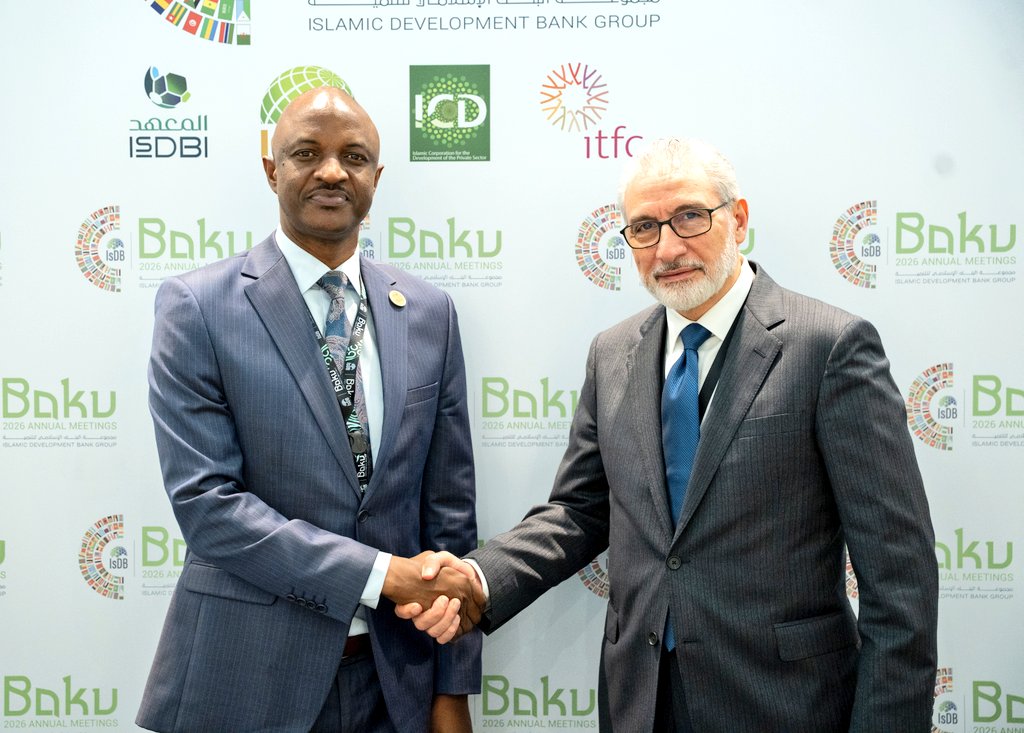
The Islamic Development Bank Executive Board has approved EUR 650.75 million, about Shs2.6 trillion, to support Uganda’s Standard Gauge Railway project.
The approval is the largest single-project financing package the bank has ever extended to Uganda.
The decision was reached during the 51st IsDB Group Board of Governors’ Annual Meetings in Baku, Azerbaijan. The meetings ran from June 16 to 19, 2026, under the theme, “Regional Integration for Sustainable Prosperity.”
Dr Ramathan Ggoobi, the Permanent Secretary and Secretary to the Treasury, led Uganda’s delegation as Temporary Governor.
He said the government remains focused on securing full financial closure for the railway project by November 2026.
Funding to support key SGR infrastructure
The new financing will support major works on Uganda’s Standard Gauge Railway network.
According to official details, the funds will finance construction of the 553-metre Jinja Nile Bridge and the 2.12-kilometre Mbuya-Kampala tunnel.
The package will also support the construction of six major railway stations. These include Tororo, Iganga, Jinja, Lugazi, Kampala East and Kampala City.
In addition, the financing will cover three mechanical workshops in Kampala East, Jinja and Tororo.
The SGR remains one of Uganda’s flagship infrastructure projects. The government says it will modernise transport, cut freight costs and improve trade links with neighbouring East African countries.
Uganda-IsDB portfolio reaches USD 896.55 million
By the end of May 2026, Uganda and the IsDB had eight active public operations, including loans and grants, valued at USD 896.55 million.
The portfolio is largely driven by the Integrated Transport Infrastructure Services Program.
Other ongoing IsDB-supported projects in Uganda cover roads, bridges, irrigation, vocational education and health infrastructure.
These include upgrades on the Muyembe-Nakapiripirit and Rwenkunye–Apac–Lira–Acholibur roads. The bank is also supporting the Masindi Port Bridge, irrigation schemes in Unyama, Namalu and Sippi, and regional oncology centres in Arua and Mbale.
Ggoobi calls for more concessional financing
Speaking at the Governors’ Round Table, Dr Ggoobi welcomed the launch of the IsDB Concessional Fund in 2026.
The fund seeks to raise concessional financing to 15 per cent of annual approvals. It is aimed at helping countries manage rising debt pressures while financing development needs.
“This fund is crucial in light of declining traditional foreign aid flows, both in volume and reliability, which has widened the financing gap,” Dr Ggoobi noted.
He also urged multilateral lenders to support reforms in the global financial system.
According to him, the financial architecture should become more inclusive, adaptive and responsive to the needs of member countries.