
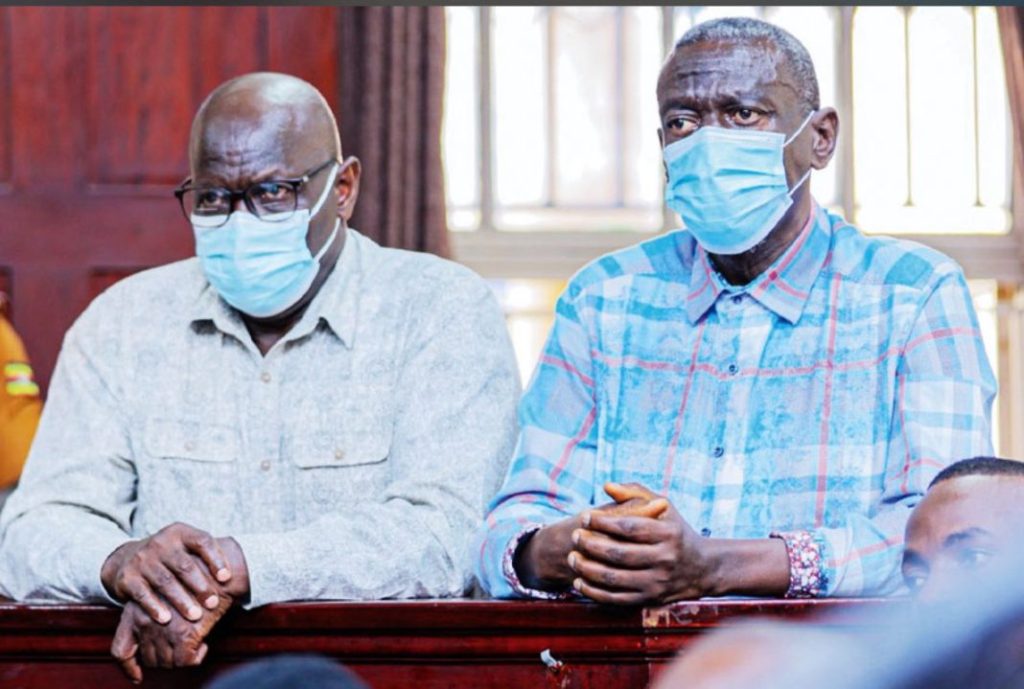
High Court Judge Emmanuel Baguma has closed preliminary proceedings in the treason case against opposition politician Dr Kizza Besigye and his co-accused after ruling that the prosecution and defence had not agreed on any matters.
The ruling now clears the way for the trial to proceed with the appointment of assessors.
Delivering his ruling on Monday, Justice Baguma said the court could not compel the two sides to agree on issues for inclusion in a memorandum.
“The court cannot force parties to agree. It is upon agreement of the parties that the court can prepare a memorandum,” Justice Baguma ruled.
“After listening to both sides, I do not see any agreed matters, and the case has no memorandum to sign. Therefore, I will proceed to choose three assessors.”
The judge then appointed John Musana, Sarah Babirye and Richard Okello as assessors. Their role will be to assist the court during the trial.
Defence raises fair trial concerns
The ruling followed a lengthy dispute between the defence and prosecution over issues the defence wanted addressed before the trial begins.
One of the defence lawyers, Mr Elias Lukwago, argued that several matters affecting the accused persons’ right to a fair trial remained unresolved.
He cited access to facilities at Luzira Prison, provision of daily court records, pending applications, agreed matters, disclosure of witnesses and exhibits, trial preparation time and appointment of assessors.
The defence also requested a private interview room at Luzira Prison. Mr Lukwago said Dr Besigye and his lawyers needed confidential space to consult without interference from prison officers.
“Privacy is important because we are always interrupted by prison authorities who eavesdrop on our conversations. This compromises the right to a fair trial,” Mr Lukwago told court.
The defence also sought arrangements to allow Besigye and his co-accused to consult lawyers before court sessions.
They further asked for better public access to proceedings and provision of meals, saying the accused spend long hours in court.
Mr Lukwago also argued that two pending applications should be resolved before the trial proceeds. These include a bail application and a human rights enforcement application.
“The law demands that proceedings be stayed until this application is disposed of,” he submitted.
Defence asks for daily transcripts
Another defence lawyer, Mr Frederick Mpanga, said Section 67(2) of the Trial on Indictments Act refers to a memorandum of agreed matters, not only agreed facts.
He also asked court to provide daily transcribed records of proceedings.
“We have noted that proceedings move so fast that the court is not in a position to capture everything. We want a transcribed version on a daily basis,” Mr Mpanga said.
The defence maintained that they needed enough time to review the evidence disclosed by the prosecution.
They also asked to be informed in advance about the order in which prosecution witnesses would testify.
Prosecution opposes defence requests
Assistant Director of Public Prosecutions Thomas Jatiko opposed most of the defence requests.
He argued that many of the issues raised by the defence were outside the prosecution’s mandate.
“The matters raised under facilities are not under the ambit of the prosecution. The prosecution has no control over that,” Mr Jatiko said.
He also told court that the prosecution had no agreed facts to present.
“If the prosecution says they have no agreed facts, the defence should not force them. This is the reason the prosecution will call witnesses,” he argued.
Court says Luzira access issue was addressed
In his ruling, Justice Baguma said the court had already directed the Deputy Registrar to write to Luzira Prison authorities about defence access to the accused persons.
He said the court had received a response dated June 8. The letter granted defence lawyers permission to access the accused for purposes of preparing for trial.
“The matter of facilities at Luzira has been answered,” the judge said.
On public access to court, Justice Baguma said the court had never barred members of the public from attending proceedings.
However, he said space limitations require administrative management by court officials.
Besigye questions unresolved issues
After the ruling, Mr Lukwago attempted to halt the proceedings. He cited a pending application in the case of Besigye and Lutale versus the Chief of Defence Forces.
He argued that the application should stay the trial.
Dr Besigye also asked court to clarify whether the preliminary hearing had ended. He insisted that several issues remained unresolved.
“One of the issues is us accessing documentation which the prosecution intends to rely on in this trial. The disclosures, we have not seen them up to now,” Dr Besigye told the court.
Despite the objections, court proceeded to appoint the three assessors.
Justice Baguma also directed the prosecution to produce at least one witness when the case resumes on June 11. This is despite a human rights application filed by Dr Besigye and Hajji Obeid Lutale Kamulegeya.
Besigye criticises alleged political interference
Addressing court after the ruling, Dr Besigye acknowledged that the proceedings had been described as preliminary hearings.
However, he criticised what he called political interference in the judicial process.
He urged President Yoweri Museveni to formally restore pre-trial detention laws instead of, in his words, “harassing courts to do what you are doing.”
His co-accused, UPDF officer Denis Oola, also questioned the timing of the assessors’ appointment.
He noted that prison authorities had only granted defence lawyers access to the accused on the same day.
Dr Besigye, Hajji Obeid Lutale Kamulegeya and Oola face treason charges.
The charges stem from allegations that they participated in meetings in Uganda and abroad between 2023 and 2024 aimed at overthrowing the government.
They deny the charges.