
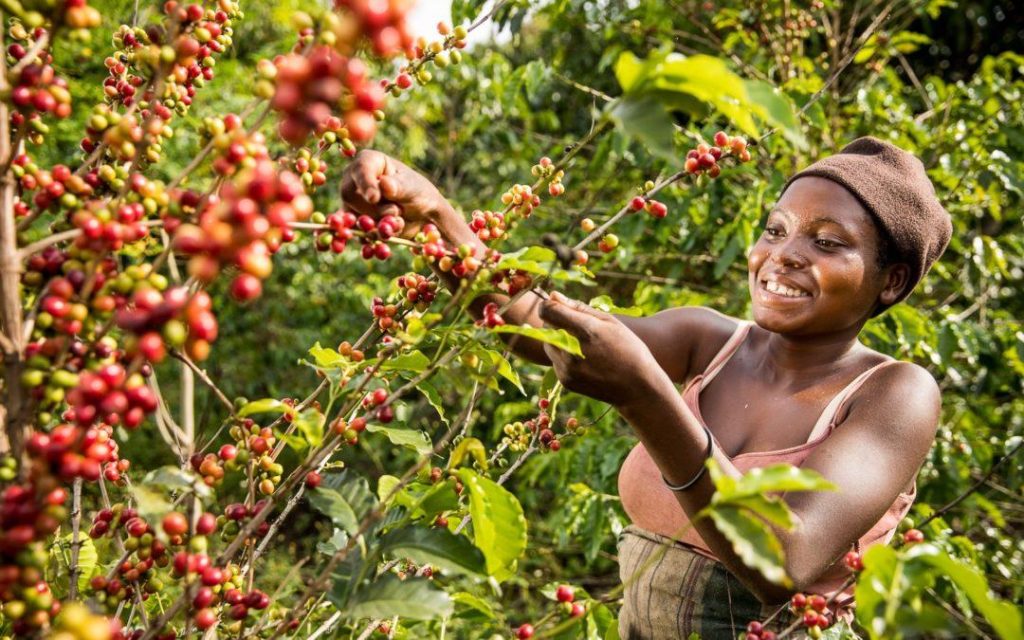
Coffee farming is gaining fresh momentum in Kalangala District as more farmers, youth groups and agricultural leaders return to the crop.
They attribute the renewed interest to rising coffee prices, improved access to seedlings and continued sensitisation campaigns.
The revival comes as coffee remains Uganda’s leading agricultural foreign exchange earner.
In 2025, coffee earned the country $2.46 billion, representing 18.3 percent of total export earnings.
Coffee Returns to Island Communities
Commercial coffee farming in Kalangala began decades ago when the crop was introduced to island communities under the then Masaka District.
At the time, a few farmers adopted Robusta coffee as a cash crop.
They grew it alongside food crops such as bananas and cassava.
However, many later abandoned coffee for fishing, which was considered more profitable.
Mr Peter Senyanjja, a coffee farmer in Bujumba, said his grandparents were among the first islanders to grow coffee.
He said the crop once supported many households in Kalangala.
“Our forefathers had coffee plantations from which they earned their living, but as time passed, many abandoned coffee and opted for fishing after coffee prices fell,” he said during an interview on Monday.
According to the 2014 National Housing and Population Census, only 198 farmers in Kalangala were engaged in coffee growing.
That represented one percent of the district’s population.
The same census showed that 6,093 people, or 30.4 percent, were involved in other crop farming activities.
Buganda Campaign Raises Interest
Mr Senyanjja said the number of coffee farmers started growing after the launch of Buganda Kingdom’s Emmwanyi Terimba campaign.
The campaign was championed by Katikkiro Charles Peter Mayiga in 2022.
“He lifted the hopes of many islanders, especially the youth, who realised it was possible to earn a living from coffee regardless of the size of land they owned,” Mr Senyanjja said.
He added that rising prices pushed many residents back into coffee farming.
“A kilogramme of coffee rose to as high as Shs14,000 compared to between Shs8,000 and Shs10,000 earned from a kilogramme of fish. So, many people began shifting from fishing to coffee farming,” he said.
Mr Senyanjja said limited land on the islands also made coffee more attractive.
“A person with one acre or even half an acre realised they could engage in coffee farming because oil palm cultivation generally requires at least three acres and above for one to earn reasonable income,” he said.
Seedlings Become Easier to Access
The rise in coffee farming has attracted investment in processing.
A coffee milling machine has been established on Bugala Island.
The growing demand for coffee seedlings has also led to the creation of local nurseries.
Mr Dennis Ssekadde, the manager of Ssese CBS PEWOSA, said the organisation set up a coffee seedling nursery to help island farmers access planting materials more easily.
“We have so far registered more than 102 farmers and distributed over 20,000 seedlings across Mugoye and Bujumba sub-counties, as well as in Kalangala Town Council,” he said.
He said many farmers previously struggled to access seedlings from mainland nursery beds.
“We realised many people wanted to plant coffee but were challenged by the long distances to nursery beds on mainland. Under the Emmwanyi Terimba programme, we decided to bring seedlings closer to them, and now we are seeing the numbers grow every day,” he added.
Youth Join Coffee Farming
Mr Deus Kalwaanyi, a youth farmer in Kalangala Town Council, said access to information and agricultural extension services has attracted many young people to coffee.
“Extension workers have consistently encouraged young people to join coffee farming, and those who accepted have been trained in modern farming practices,” he said.
He said Kalangala now has more coffee nurseries than before.
“Today we have more than three coffee nurseries in Kalangala. Farmers can obtain seedlings at affordable prices and spend less on transportation compared to sourcing them from Masaka or Bukomansimbi districts,” Mr Kalwaanyi said.
He credited both Buganda Kingdom and the central government for supporting coffee farming.
“Through BUCADEF, Buganda Kingdom has organised many trainings in Kalangala, helping farmers understand the economics of coffee farming and the type of fertilisers required. This has made coffee farming more attractive,” he said.
Mr Kalwaanyi also said government programmes that distributed free seedlings and fertilisers helped bring more youth into the sector.
“Youth received seedlings and fertilisers free of charge, which encouraged many to join coffee farming. Although fertiliser prices have since risen, many farmers are now using organic manure as an alternative,” he said.
Farmers Form Cooperative
Mr Robinson Kizza, a farmer and chairperson of coffee farmers under the Ssese Coffee Farmers Cooperative Society, said the increase in coffee farmers pushed them to form a cooperative.
He said the group aims to improve collective marketing and eventually establish a farmer-owned coffee mill.
Mr Kizza said attractive prices remain the biggest driver of the renewed interest.
“There was a time when a kilogramme of coffee was selling at about Shs4,000. When prices rose rapidly to around Shs14,000 in 2025, coffee farmers started buying cars and building better houses. Many people were attracted into the business after seeing those benefits,” he said.
Coffee growing has become a lucrative activity in Kalangala over the last five years.
The district has traditionally been known for oil palm growing and fishing.
Agriculturalists say coffee could again become one of Kalangala’s leading income-generating enterprises if prices remain strong.
They also point to the need for continued technical support and access to quality planting materials.
With more farmers investing in coffee production, there is growing optimism that Uganda’s Coffee Roadmap target of producing 20 million 60kg bags by 2030 could be achieved earlier than projected.