
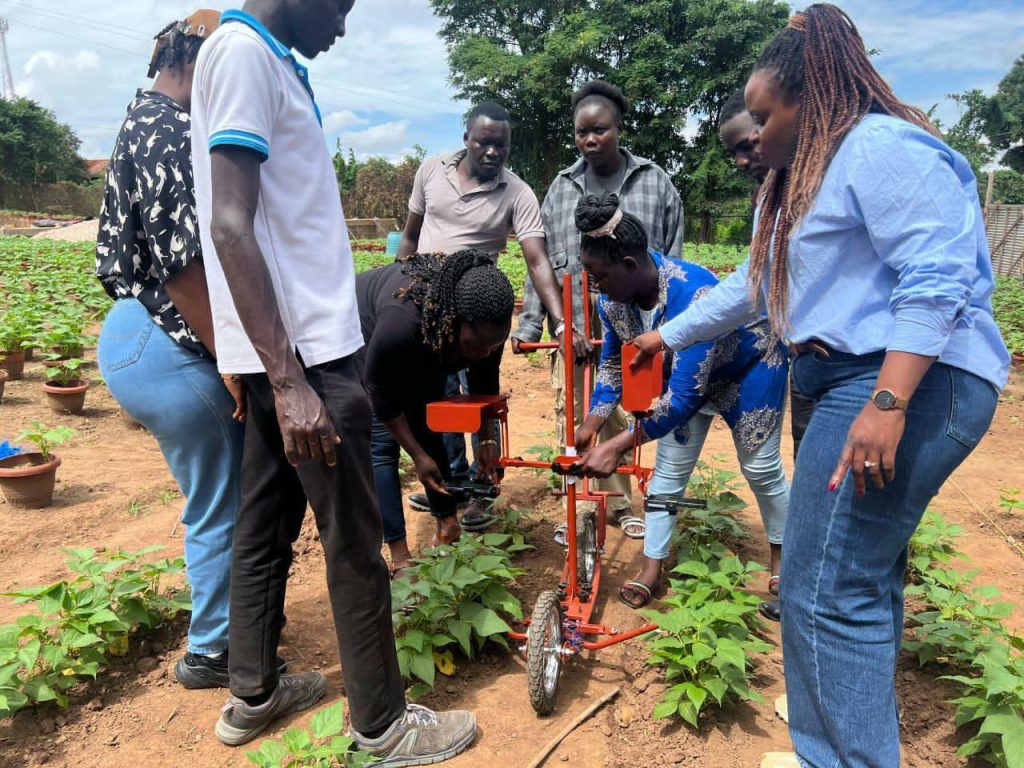
Artificial Intelligence is increasingly being viewed as a tool that can improve agricultural productivity, support real-time monitoring of crops and livestock, and help farmers use inputs more efficiently.
The growing interest in AI comes as global agriculture faces rising pressure from climate change, land degradation, labour shortages, supply chain disruptions and increased food demand from a growing population.
However, the benefits of AI in agriculture remain uneven. While developed countries are using precision technologies to improve yields and resource use, many farmers in developing countries still face major barriers.
Productivity gaps remain wide
Agricultural productivity differs sharply across regions.
In the United States, maize yields often exceed 9,071 kilogrammes per hectare. These higher yields are supported by mechanisation, improved seed varieties, irrigation, efficient input use and precision agriculture technologies.
By contrast, maize yields in many parts of sub-Saharan Africa remain around two to three tonnes per hectare.
This gap reflects several challenges. Many farmers in the region have limited access to quality inputs, depend heavily on rainfall, and operate in areas with weaker infrastructure and institutional support.
Smallholder farmers face the biggest barriers
Smallholder farmers account for about 80 percent of farmers in developing countries.
Many of them continue to struggle with low yields because they lack reliable access to improved seeds, fertilisers, herbicides and pesticides.
They are also less likely to use irrigation and mechanised farming tools. This makes them more exposed to climate shocks, especially droughts, floods and changing rainfall patterns.
Traditional farming methods are becoming less adequate for modern food systems. Heavy reliance on rain-fed farming, local seed varieties, manual labour and poor input application limits productivity.
AI could help address some of these challenges. But its success depends on policies, infrastructure and fair access to digital tools.
Without these conditions, AI may widen existing inequalities instead of reducing them.
How AI is changing farming
AI is already shaping agriculture in developed countries.
Farmers are using precision farming tools to improve fertiliser application, irrigation planning, pest control and yield prediction.
These technologies allow farmers to collect and analyse data more quickly. They also support better decisions on when to plant, water, spray or harvest.
In livestock farming, AI can support real-time monitoring of animal health, feeding patterns and productivity.
Such tools can reduce waste, improve efficiency and strengthen resilience to climate variability.
Infrastructure remains critical
AI-driven agriculture requires more than software.
Farmers need reliable electricity, internet connectivity, smart devices, data systems and technical support.
In many developed countries, digital infrastructure supports continuous data collection through satellites, sensors, cloud platforms and connected farm equipment.
This allows farmers to make real-time decisions and use precision agriculture tools more effectively.
Reliable electricity is also essential. It powers sensors, automated irrigation systems, drones and digital platforms used in AI-supported farming.
Without stable power supply, many of these technologies cannot operate consistently.
Policy and data governance concerns
Strong institutional support has also helped developed countries adopt agricultural technology more quickly.
Clear rules on data privacy, transparency and accountability give farmers and technology providers more confidence.
However, AI adoption raises important ethical and governance concerns.
These include data ownership, privacy, security, informed consent, algorithmic bias, transparency and accountability.
Equitable access is also a major concern. If AI tools remain available only to large commercial farms, smallholder farmers may fall further behind.
For AI to support inclusive agricultural transformation, governments and development partners must address infrastructure, affordability, digital literacy and farmer support systems.
The technology has strong potential to improve food production and resilience. But that potential will only be realised if smallholder farmers can access and use it fairly.